Posted on

Double Crochet Stitch: How to Crochet, Count Rows & Fix Mistakes

Double crochet is one of the most useful basic crochet stitches because it creates height
quickly without making the fabric as dense as single crochet. Once the movement becomes comfortable,
you will see it everywhere: blankets, granny squares, garments, shells, stripes, textured stitches and
many beginner patterns.

If you are still getting comfortable with chains, yarn tension and where to insert the hook, start with our
Crochet for Beginners guide. This article focuses specifically on how double crochet
is formed, how to recognize the stitch, count rows, handle turning chains and correct the mistakes beginners
make most often.

Quick answer

In U.S. crochet terminology, double crochet is abbreviated dc.

The basic motion is: yarn over, insert the hook, pull up a loop, then work the loops off in two stages.

What Makes Double Crochet Different?

The basic crochet stitches are mainly distinguished by height and by how the loops are worked from the hook.
Double crochet is taller than single crochet and half double crochet, but shorter than treble crochet.
That extra height means each row grows faster and usually produces a more open fabric.

U.S. stitch Abbreviation Relative height Fabric character U.K. equivalent name
Single crochet sc Short Dense and firm Double crochet
Half double crochet hdc Medium Solid with moderate height Half treble
Double crochet dc Tall Flexible, faster-growing, slightly open Treble
Treble crochet tr Very tall Open and elongated Double treble

This terminology difference matters. A U.S. double crochet is called a
treble in U.K. terminology, so always check which system the pattern uses before starting.
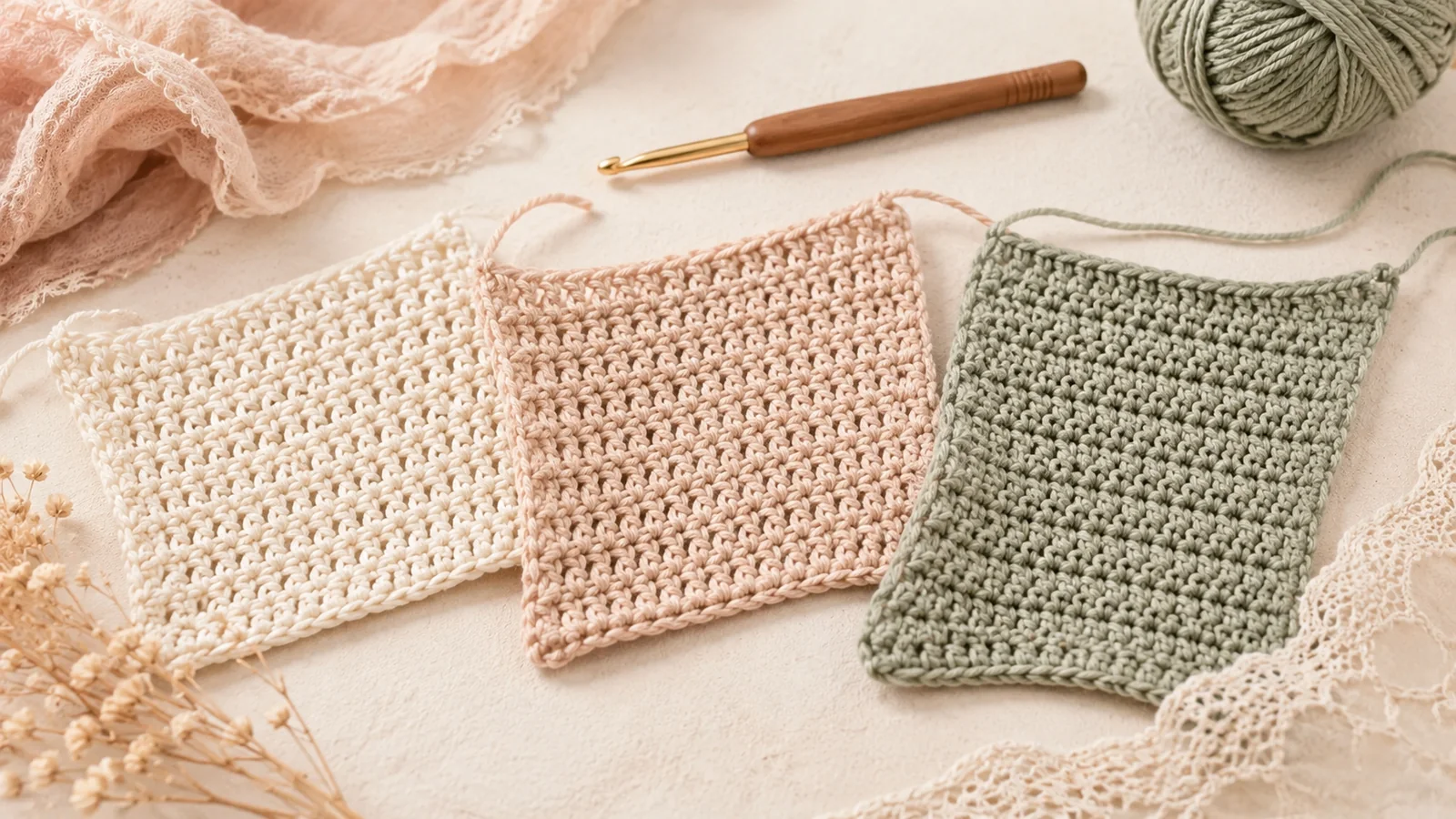
Crochet stitch swatches showing different heights and textures
Stitch height changes the density, drape and speed of the fabric.

How to Make a Double Crochet Stitch

The source lesson teaches double crochet after the chain and single crochet, which makes sense:
the stitch adds one yarn-over before the hook enters the work and then removes the loops in two stages.
Here is the same technique summarized in original wording.

  1. Yarn over once.
    Bring the working yarn over the hook before inserting it into the stitch.
  2. Insert the hook.
    Put the hook into the next stitch or foundation chain position specified by the pattern.
  3. Pull up a loop.
    Yarn over again and draw the yarn through the stitch. You should now have three loops on the hook.
  4. Work through two loops.
    Yarn over and draw through the first two loops. Two loops remain.
  5. Finish the stitch.
    Yarn over once more and draw through the final two loops. One loop remains on the hook.
What to watch while practicing
The hook should move smoothly through the loops. If you have to force it, loosen your yarn tension slightly.
If the loops become very large and uneven, slow down and shorten the working loop on the hook.
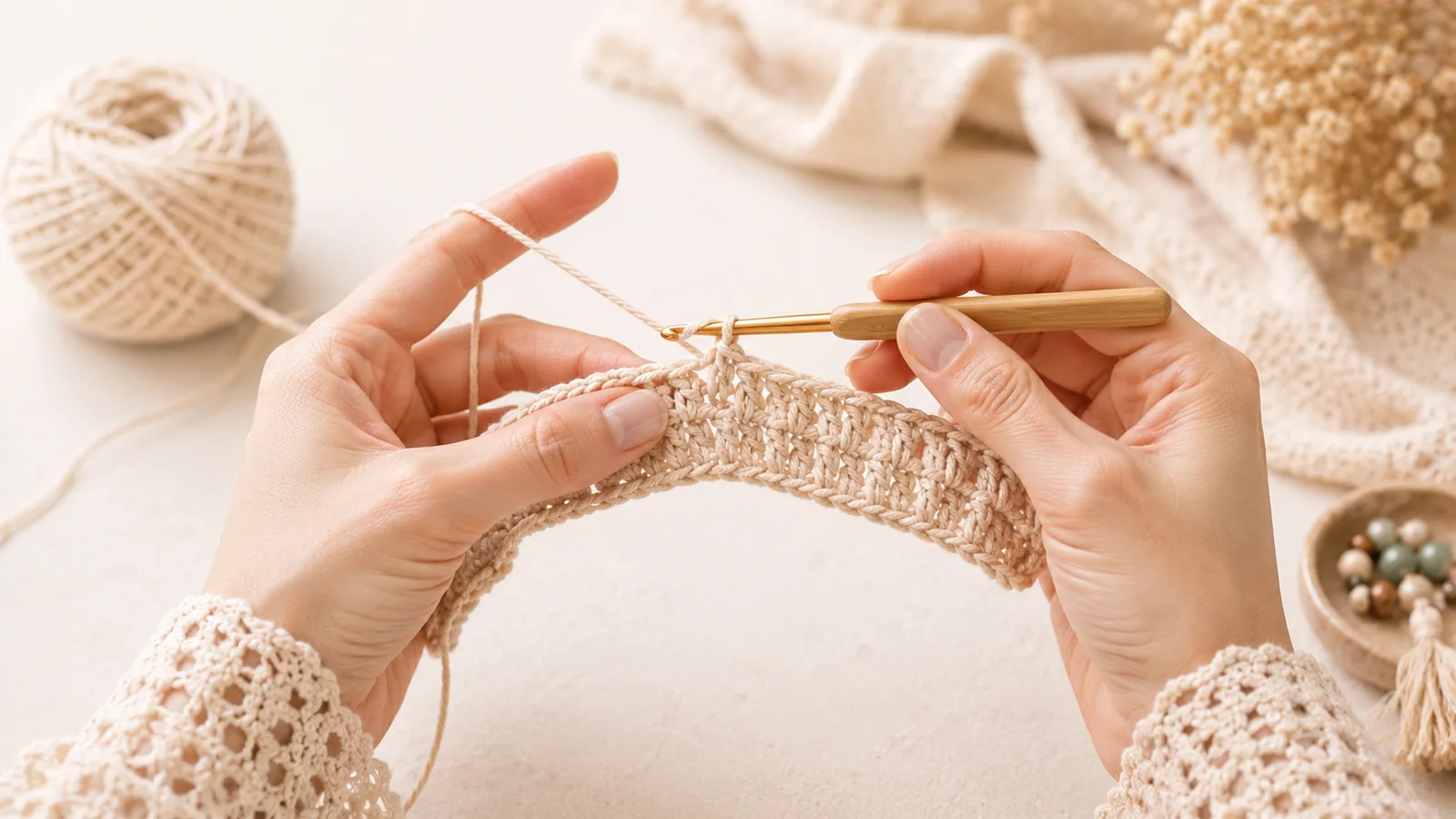
Close-up of double crochet stitch practice with yarn and crochet hook
Practice the movement slowly until the three-loop stage and two-step pull-through feel consistent.
800+ CROCHET PATTERNS

Practice Double Crochet in Real Projects

Use the stitch in blankets, granny squares, bags, baby projects and more across the full crochet collection.
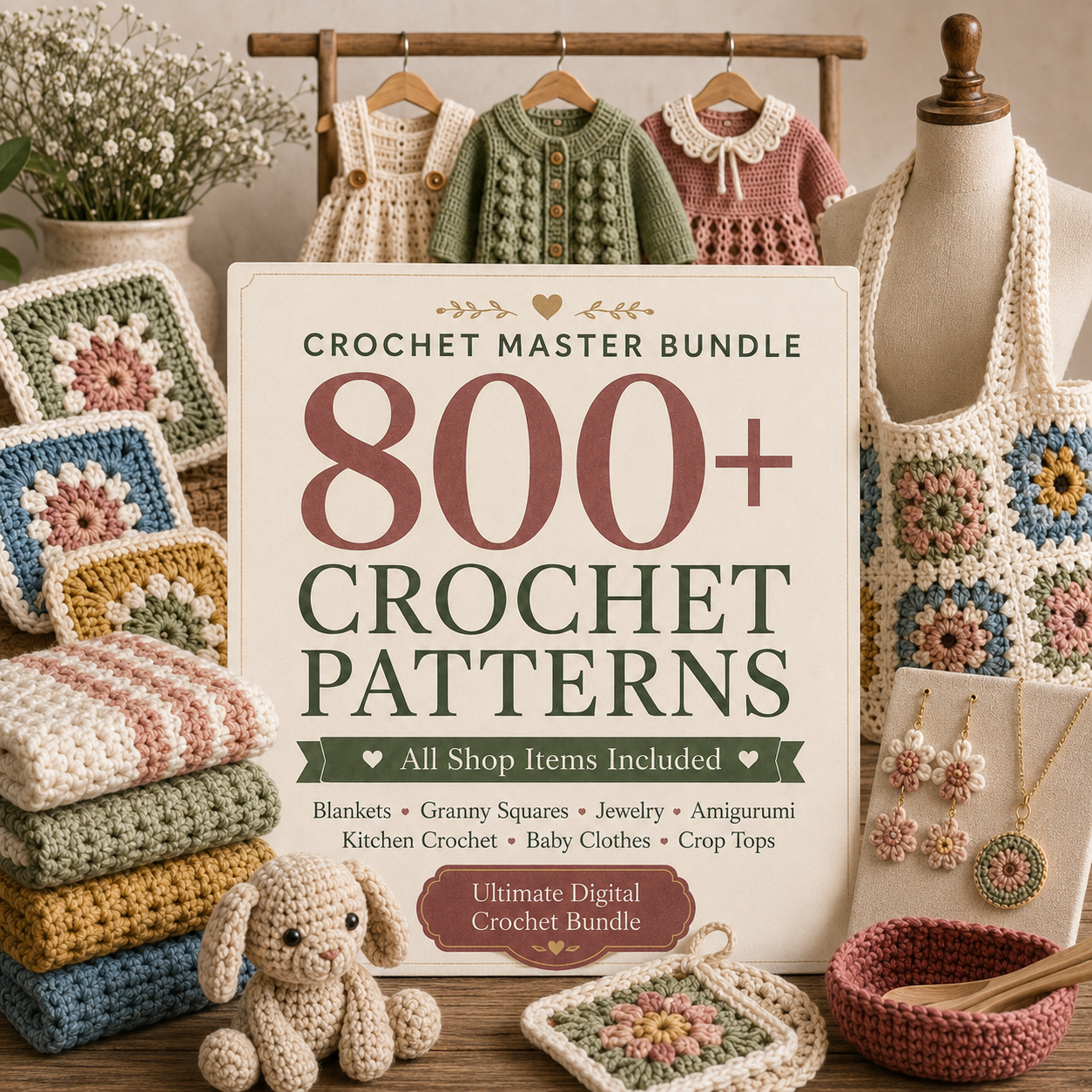

EXPLORE 800+ CROCHET PATTERNS →

800 plus crochet patterns collection with blankets bags granny squares and more

Turning Chains: Why They Confuse Beginners

When rows are worked back and forth, the working yarn must be brought up to the height of the next row.
Traditional double-crochet instructions often use a chain-three turning chain and may count it as the first
stitch of the row. However, modern patterns do not all handle turning chains the same way.

When the turning chain counts as a stitch

The next double crochet is usually worked into the following stitch so you do not accidentally increase.
At the opposite edge, you may need to work into the top of the turning chain to keep the stitch count correct.

When it does not count

Some designers use a shorter or alternative turning method and tell you to work into the first stitch.
In that case, follow the pattern instructions rather than applying a universal rule.

The safest habit is simple: read the pattern note about the turning chain before starting the first row.
It prevents both widening edges and missing stitches.

How to Count Double Crochet Stitches and Rows

A completed double crochet has a clear top “V” and a tall vertical post below it. For stitch counting,
look across the top edge. For row counting, look at the horizontal bands of posts stacked above one another.

What you are counting Where to look Common mistake
Stitches in a row The top V of each completed stitch Forgetting whether the turning chain counts
First stitch The first usable V after the turning edge Working into the same place twice
Last stitch The final V or the top of the turning chain, depending on the pattern Missing the edge stitch and making the work narrower
Rows The horizontal layers of tall stitch posts Counting the foundation chain as a full row
A stitch marker can save a lot of undoing.
Mark the first and last stitch while learning. It makes straight edges much easier to maintain.
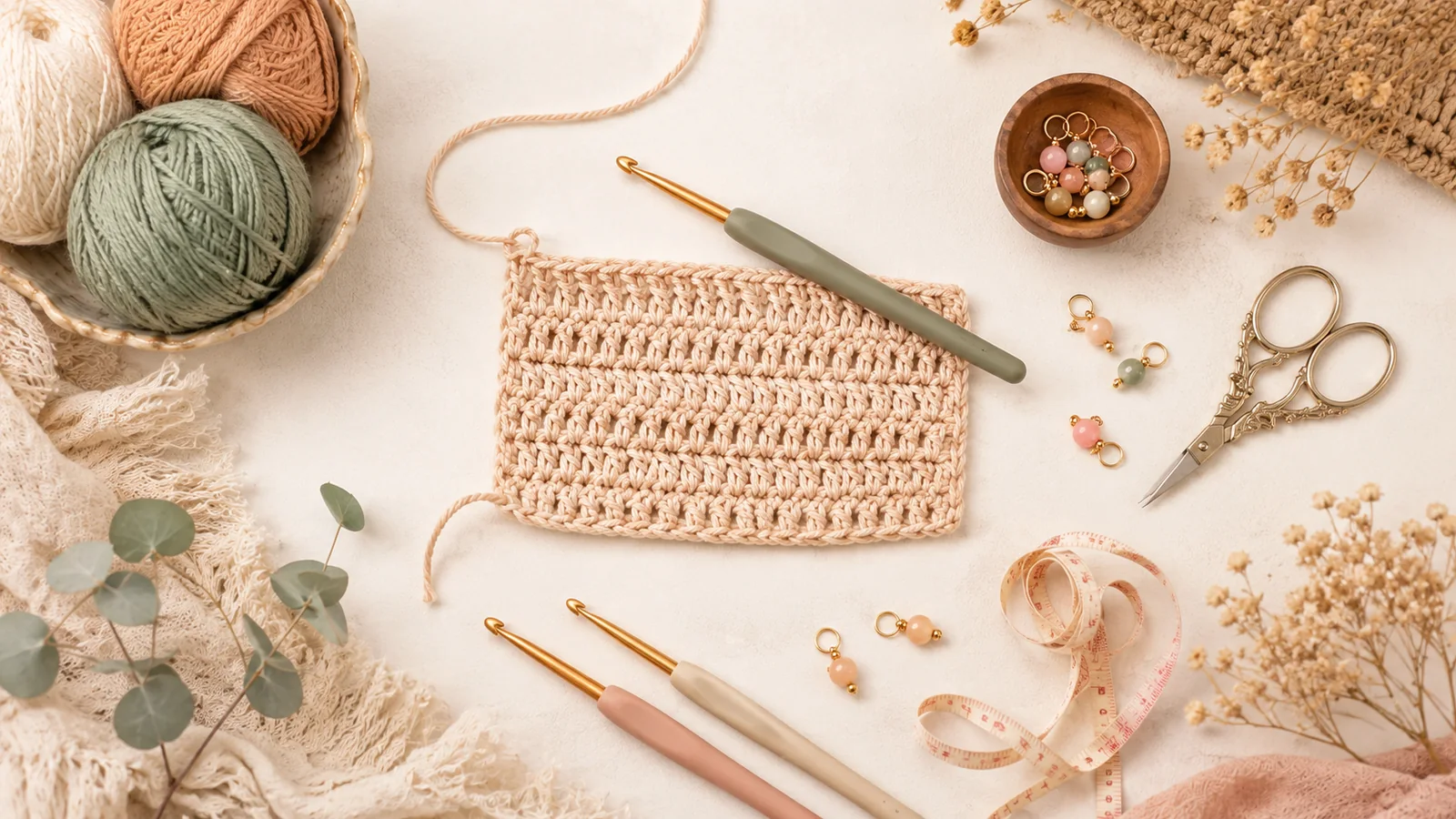
Double crochet rows and stitch counting practice with crochet swatches
Count the top V stitches across the row and check both outer edges before turning.

Why Double Crochet Works So Well for Blankets

Double crochet grows faster than shorter stitches, so it is a practical choice for larger projects.
It can be worked alone, alternated with other stitches, grouped into shells, combined with chains for openwork,
or used in post-stitch textures.

In your blanket collection, double crochet appears in everything from simple rows to shell patterns,
basket-weave textures and ripple-style designs. If blankets are what you want to make next, our
Crochet Blanket Guide explains yarn weight, sizing, gauge, construction and borders
in more detail.

  • Simple rows: good for practicing consistent tension.
  • Shells: several tall stitches grouped into one space create decorative fans.
  • Post stitches: working around the stitch post creates raised texture.
  • Ripples: increases and decreases can shape double-crochet rows into waves.
  • Granny-style clusters: grouped tall stitches create the classic open motif look.
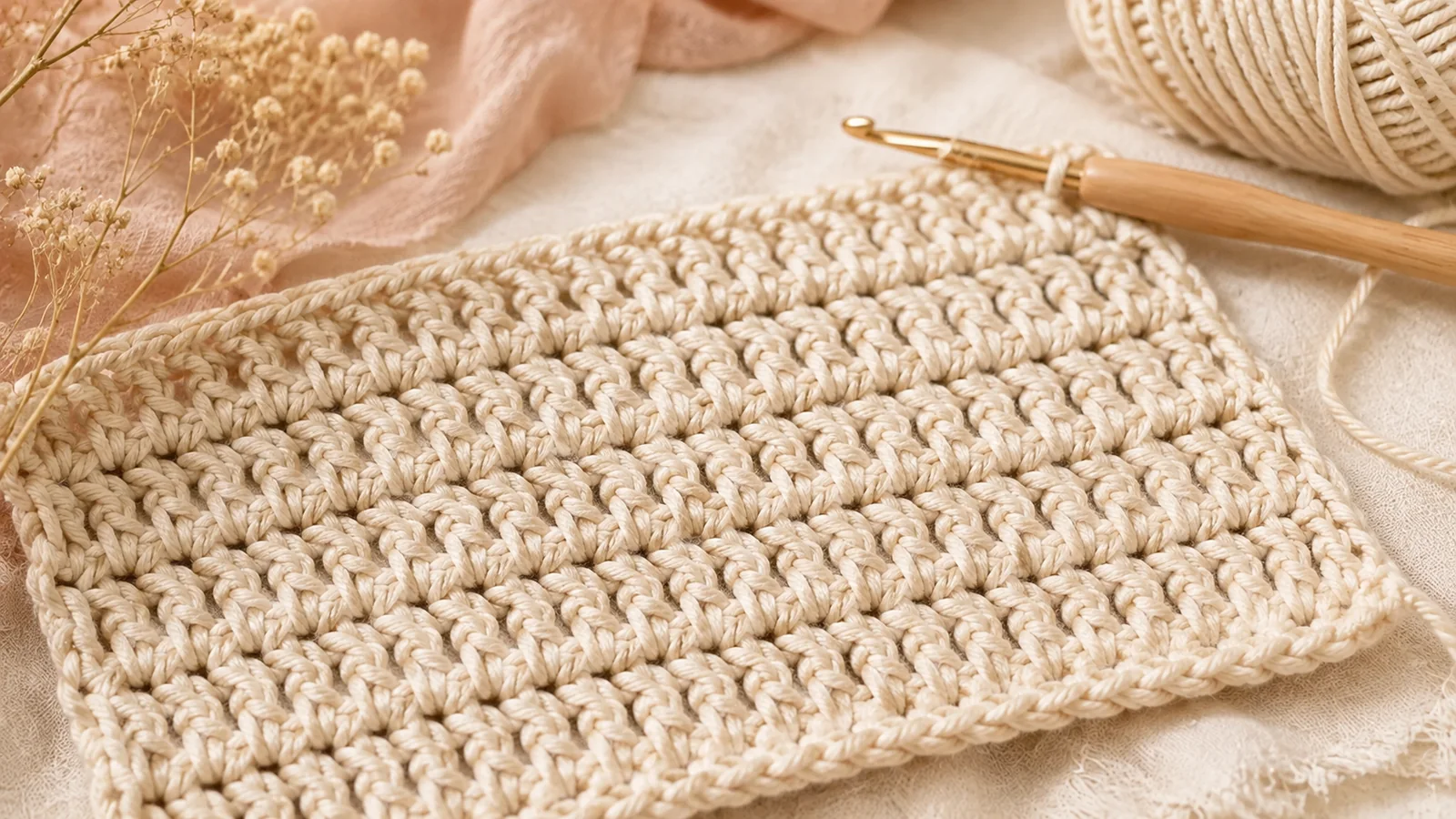
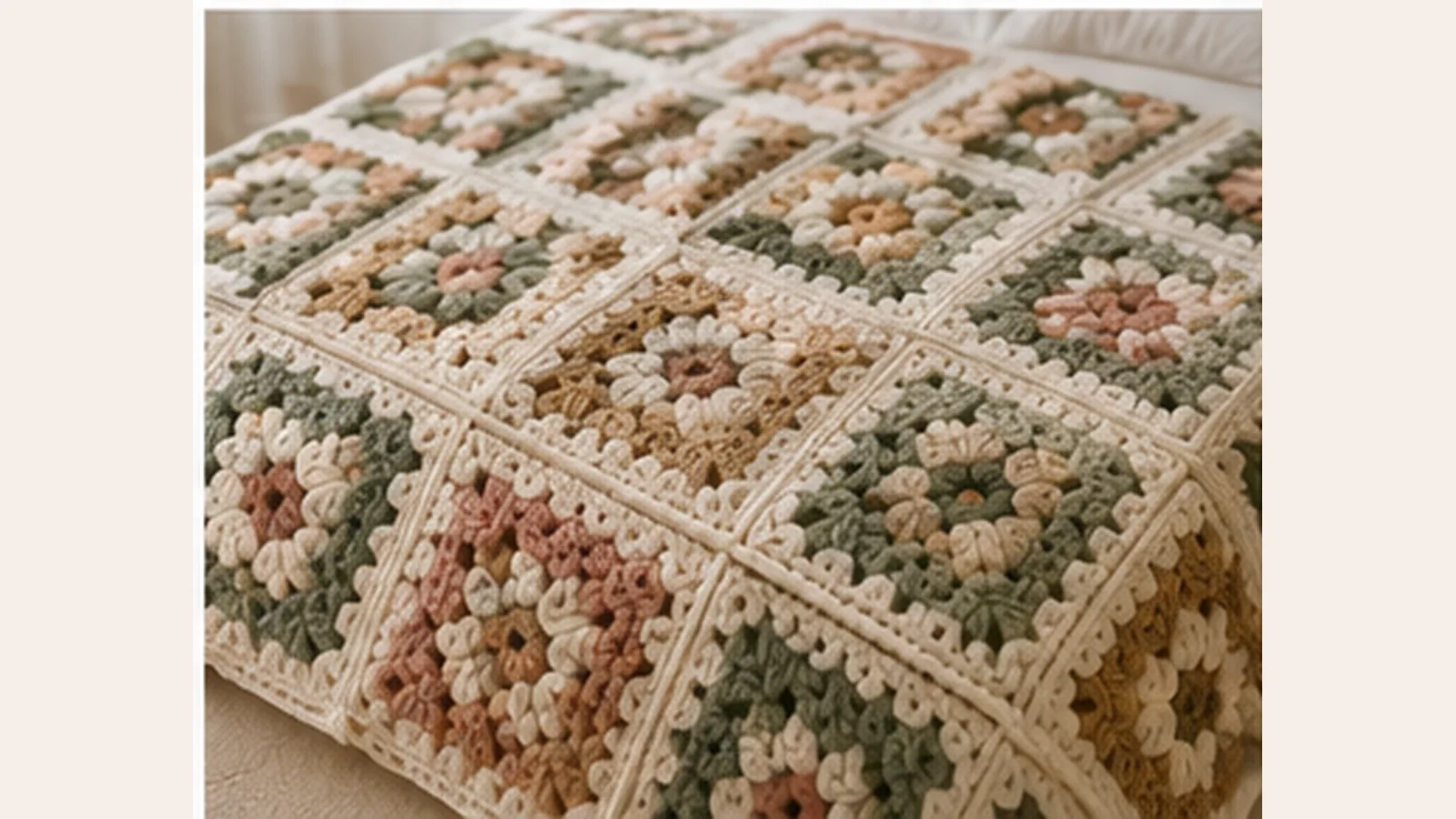
Crochet blanket textures made with double crochet and related stitch variations
Double crochet can create simple rows, shells, ripples and raised textures depending on how the stitch is combined.
FULL CROCHET COLLECTION

Ready to Turn the Stitch Into a Project?

Browse 800+ crochet patterns and choose a project where you can practice stitches, texture and shaping.


SEE THE 800+ CROCHET COLLECTION →

800 plus crochet patterns collection with blankets bags granny squares and more

Double Crochet Troubleshooting

Problem Most likely reason What to check
Rows keep getting narrower The last stitch is being missed Count the top V stitches and check the turning-chain rule.
Rows keep getting wider An extra stitch is being added at the turning edge Check whether the turning chain already counts as a stitch.
Stitches look short and stiff Tension may be too tight Relax the yarn hand and make sure the working loop is not pulled tightly around the hook.
Large gaps appear at row edges The turning chain may be taller than the surrounding stitches Follow the pattern’s turning method; do not automatically substitute your own.
Stitch count is correct but the piece is too wide Your gauge is looser than the pattern gauge Make a swatch and compare stitches per measured width.

A Simple Double Crochet Practice Plan

Instead of starting with a large project immediately, spend a short session learning what the stitch should
look and feel like. The goal is not perfection; it is consistent movement and reliable counting.

  1. Make a relaxed foundation chain. Avoid pulling each chain tight.
  2. Work one row slowly. Pay attention to the three loops that appear after pulling up yarn.
  3. Count before turning. Confirm the row has the number of stitches you expected.
  4. Work several more rows. Watch whether the side edges remain straight.
  5. Measure and compare. If you are following a pattern, compare the swatch with its gauge information.

Once this feels comfortable, try the stitch in a real project. A blanket is forgiving because double crochet
can repeat over long rows, while a lined bag can show you how a taller stitch behaves when structure matters.
For that second case, see the Crochet Bag Guide.

Double Crochet Variations You Will See in Patterns

Learning the basic stitch also makes several common variations easier to understand. They all start from
the same double-crochet movement but change where or how the stitch is completed.

dc2tog
Two double crochets are partially worked and then finished together to create a decrease.
Front post double crochet (FPdc)
The hook works around the post of the stitch from the front, creating raised texture.
Back post double crochet (BPdc)
The hook works around the post from the back, pushing the stitch texture in the opposite direction.
Double crochet shell
Several double crochets are worked into the same stitch or space to create a fan-like group.

Standard U.S. pattern abbreviations use dc for double crochet, dc2tog for
a double-crochet decrease, and forms such as FPdc and BPdc for post stitches.
Always check the pattern key when a designer introduces a special abbreviation.
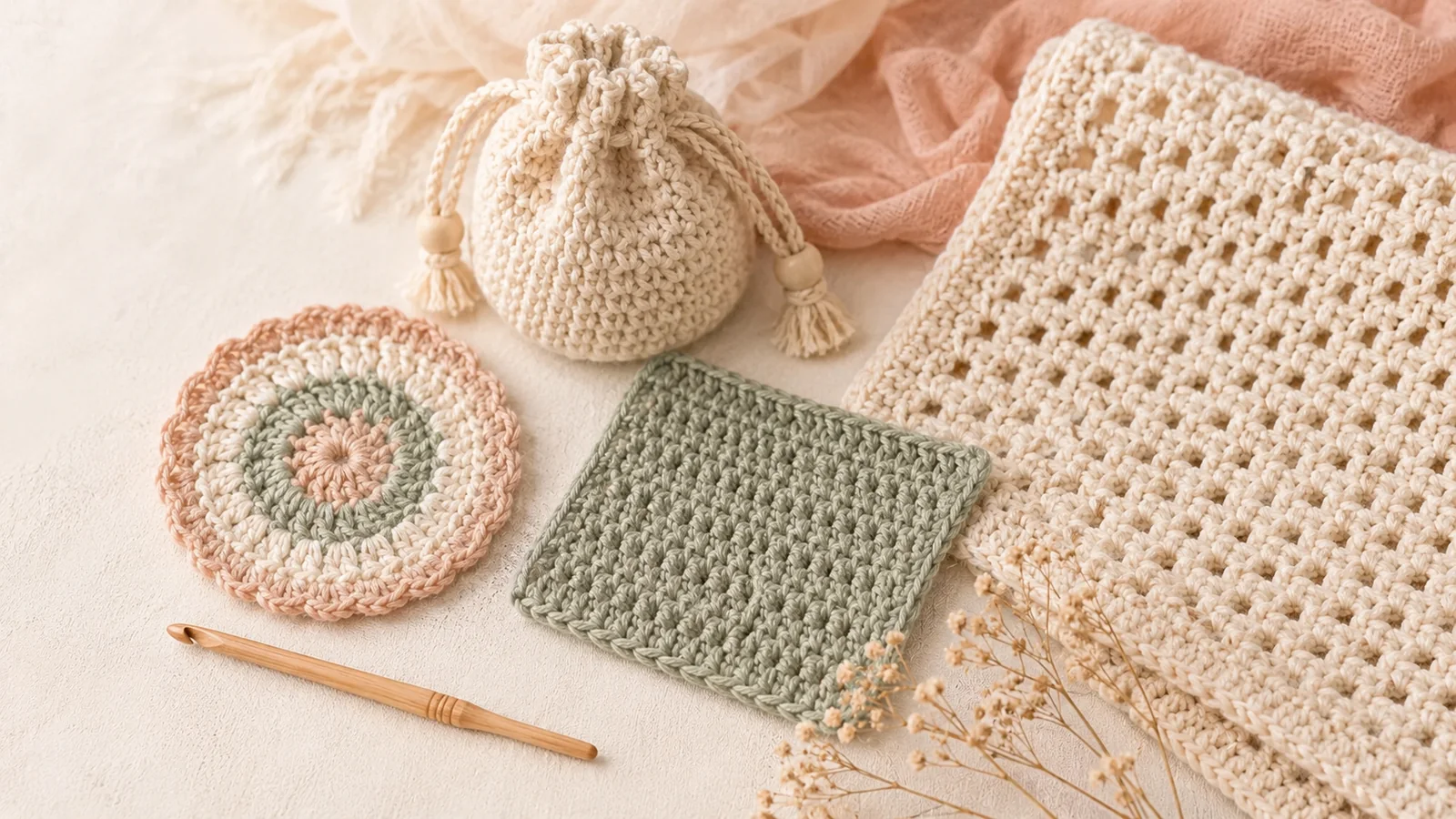
Crochet project examples using double crochet including blankets accessories and textured pieces
The same basic stitch can behave very differently depending on yarn weight, stitch combinations and project structure.

When Double Crochet Is — and Is Not — the Best Choice

Good fit Why When another stitch may work better
Blankets and throws Rows gain height quickly and can be made solid or decorative. Use shorter stitches if you want a denser, heavier fabric.
Garments and wraps The taller stitch can create more drape and flexibility. Very open dc fabric may need layering depending on the design.
Granny-style motifs Double-crochet groups create classic clusters efficiently. A denser motif may use single or half double crochet.
Bags Useful for decorative or lined designs. For an unlined bag that must hold small items, a denser stitch may be more practical.

Double Crochet FAQ

Is double crochet easy for beginners?

Yes. It adds one yarn-over and one extra loop-working stage compared with single crochet, but the movement
becomes repetitive quickly. It is one of the core stitches worth learning early.

How many loops should be on the hook during double crochet?

After you yarn over, insert the hook and pull up a loop, there are three loops on the hook. They are then
worked off two loops at a time until one loop remains.

Does a chain three always count as a double crochet?

No. Traditional instructions often count it, but modern patterns vary. Follow the turning-chain instructions
written in the pattern you are using.

Why are my double-crochet edges uneven?

The usual cause is inconsistent treatment of the first or last stitch. Mark the edges and confirm whether
the turning chain counts as a stitch.

Is U.K. double crochet the same stitch?

No. U.K. double crochet corresponds to U.S. single crochet. The U.S. double crochet covered in this guide
is called treble crochet in U.K. terminology.

800+ CROCHET PATTERNS

Keep Building Your Crochet Skills

Explore blankets, bags, granny squares, tops, baby crochet, jewelry, kitchen projects and more.

BROWSE 800+ CROCHET PATTERNS →

800 plus crochet patterns collection with blankets bags granny squares and more

Posted on

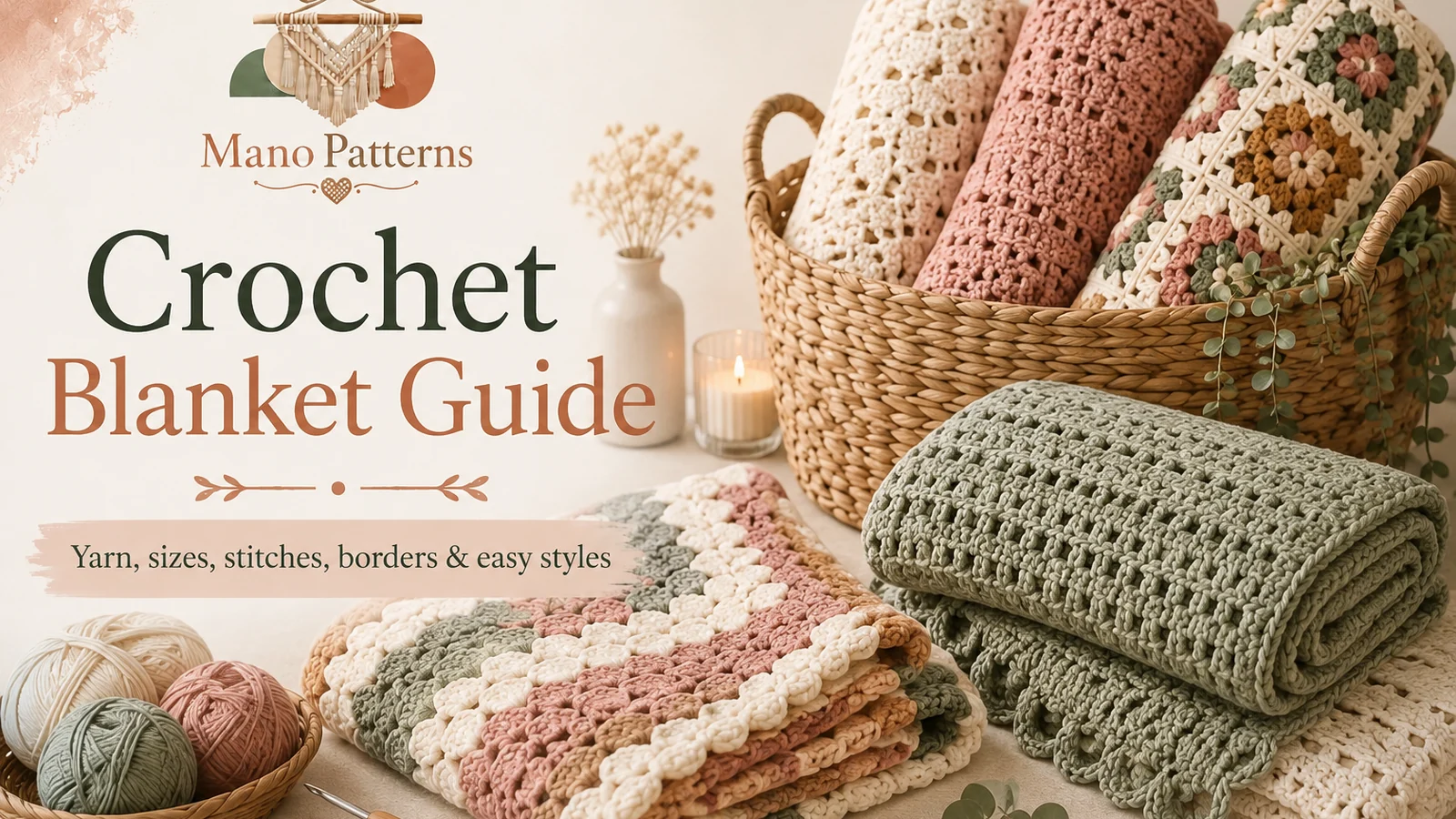
Crochet Blanket Guide: Yarn, Sizes, Stitches, Borders & Easy Styles

Crochet Blanket Guide

A crochet blanket can be one of the simplest large projects to make, but yarn weight,
stitch texture, finished size and border choice can completely change how the final blanket looks and feels.

This guide covers the practical decisions behind throws, afghans, baby blankets and larger crochet blankets:
how to choose yarn, pick a hook, understand gauge, plan size, select stitches, add borders and avoid common
problems. If you are still learning the basic stitches or how yarn and hook size work together, start with our
Crochet for Beginners guide.

Plan these five things first

  • Decide who or what the blanket is for before choosing the finished size.
  • Match yarn weight to the warmth, drape and speed you want.
  • Choose a stitch pattern you can comfortably repeat across many rows.
  • Check gauge when dimensions matter, especially for patterned or multi-panel blankets.
  • Leave enough yarn for the border and final finishing.
Blanket Styles

Crochet Blanket, Throw or Afghan: What Are You Making?

These words often overlap, but the intended use helps determine size, yarn and construction.

Lap Blanket

Smaller and easier to manage while crocheting. A good choice when you want a practical project without committing to bed-size dimensions.

Throw

Designed for a sofa, chair or extra layer of warmth. Throws are ideal for experimenting with texture, stripes and decorative borders.

Afghan

Often used as a general name for decorative crocheted blankets, especially larger or patterned styles.

Baby Blanket

Smaller and lighter, usually made with soft yarn and a stitch pattern that feels comfortable against the skin.

Bed Blanket

Requires more planning because small differences in gauge, yarn usage and row count become much more noticeable across a large surface.

Wrap-Style Blanket

Some patterns sit between a throw and an oversized wrap, combining warmth with a more wearable shape.

Different crochet blanket styles including lap blanket throw afghan baby blanket and textured throw

Start with the intended use, then choose the yarn, size and stitch pattern around it.

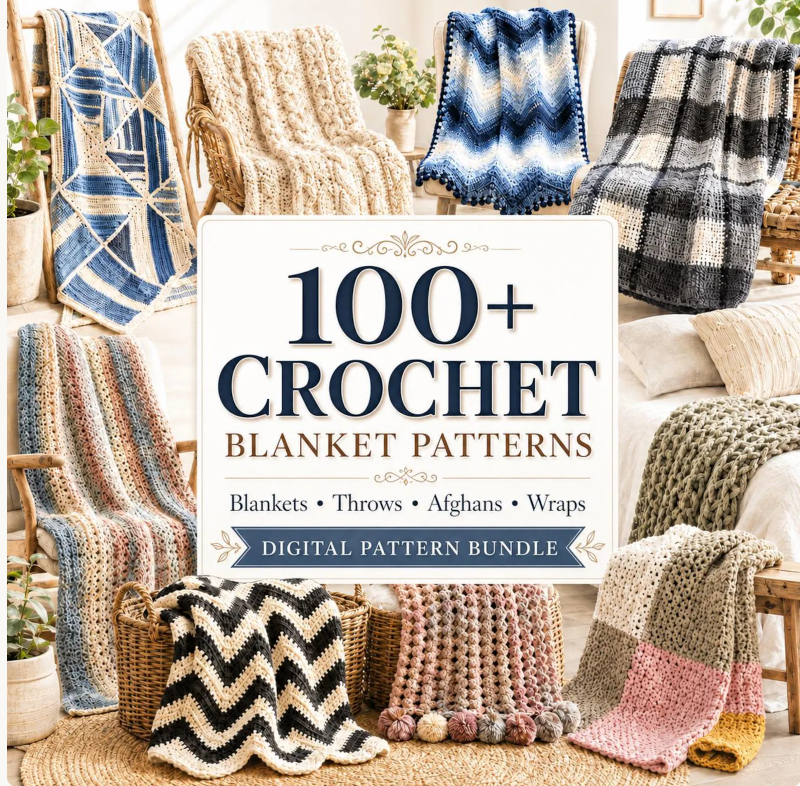
100+ Crochet Blanket Patterns

Find a Blanket Style You Want to Make

Explore 100+ crochet blanket patterns with throws, afghans, textured blankets, baby styles and more.


BROWSE 100+ BLANKET PATTERNS →

100 plus crochet blanket patterns with throws afghans baby blankets and textured designs

Yarn Choice

How to Choose Yarn for a Crochet Blanket

Yarn weight affects warmth, drape, stitch definition, total project weight and how quickly the blanket grows.

Medium / Worsted Weight

A versatile choice with good stitch definition and a wide range of colors. It works well for everyday blankets and many beginner-friendly patterns.

Bulky & Super Bulky

Larger yarn and hooks build fabric quickly and create a substantial, cozy feel. The source collection includes fast throws made with large hooks and bulky yarn.

Lighter Yarn

Creates a thinner, more flexible fabric, but takes more stitches and rows to cover the same area.

Fiber Content

Check the yarn label for fiber, washability and care instructions. A blanket is a large project, so care requirements matter before you invest in the full quantity of yarn.

Buy enough yarn from the start: large blankets use a lot of yardage, and later dye lots can sometimes look slightly different.
Crochet blanket yarn in medium bulky and super bulky weights beside crochet hooks

Yarn weight changes the blanket’s warmth, drape, texture and how quickly it grows.

If you want a quick refresher on reading yarn labels and matching hook size to yarn, see Crochet for Beginners.

Sizing

How to Plan Crochet Blanket Size

There is no single universal blanket size. The right dimensions depend on how the blanket will be used and whether you want it to cover a person, chair, sofa or bed.

Start with a Target Width

Width determines the length of the foundation chain or starting row in many one-piece blankets.

Measure as You Go

Large projects can shift slightly as tension settles. Measure occasionally instead of waiting until the end.

Remember the Border

Borders add extra width and length. If the finished dimensions matter, include the border in your plan.

Check Pattern Gauge

Gauge matters more when a pattern gives specific dimensions or uses a repeat that must fit a precise width.

Measure the actual space

If the blanket is for a particular sofa or bed, measure that space rather than relying only on generic size charts.

Gauge

Does Gauge Matter for Crochet Blankets?

Gauge may feel less critical for a simple throw than for a fitted garment, but it still affects the final size, drape and yarn usage.

The blanket patterns in the source books list gauge alongside yarn, hook size and finished measurements. Some measure ordinary stitches, while textured designs may measure shells or pattern repeats instead.

If your gauge is too tight

The blanket may become smaller, denser and stiffer, and you may need more rows or repeats to reach the target size.

If your gauge is too loose

The blanket may become larger, more open and more flexible than the pattern intends.

Stitch Choice

Crochet Stitches That Work Well for Blankets

A good blanket stitch is one you enjoy repeating. Texture is important, but so are rhythm, yarn usage and how the fabric feels across a large area.

Single Crochet

Dense and sturdy. It creates a warm fabric but can take longer because each row is relatively short.

Half Double Crochet

A useful middle ground: more height than single crochet with a fairly solid fabric.

Double Crochet

Builds height quickly and appears throughout blanket and throw patterns in many different textures. For a closer look at the stitch itself, see our Double Crochet Stitch Guide.

Shell Stitches

Repeated stitch groups create decorative rhythm and are commonly used in classic blanket designs.

Post Stitches

Front- and back-post stitches can create deep ridges, basket-weave effects and other raised textures.

Ripple & Wave Patterns

Increases, decreases and stitch-height changes create the familiar wave effect used in many striped blankets.

Crochet blanket stitch swatches showing single crochet double crochet shells waves and textured stitches

Choose a stitch texture you can comfortably repeat across many rows.

Crochet Blanket Pattern Collection

Ready to Start Your Next Blanket?

Choose from 100+ blanket designs and find a project that matches your style and skill level.


SEE THE BLANKET COLLECTION →

Crochet blanket pattern collection with many handmade blanket styles

Construction

Common Ways Crochet Blankets Are Constructed

Some blankets are one continuous piece, while others are assembled from blocks, panels or repeated motifs.

One-Piece Rows

One of the simplest methods: begin at one edge and work back and forth until the desired length is reached.

Stripes

Color changes can create strong visual interest without changing the basic stitch pattern.

Granny Squares

Individual motifs can be joined into a larger blanket. This method makes the project modular and easy to work in smaller sections.

Panels or Blocks

Repeated sections can be made separately and assembled later, which is useful for patchwork-style designs.

Crochet blanket construction with one piece rows stripes panels and granny square sections

Construction method changes how portable the project feels while you are working on it.

Color Planning

How to Plan Colors for a Crochet Blanket

Blankets give you a large canvas, so even a simple stitch pattern can look completely different depending on the color plan.

One Color

Lets texture become the main feature and reduces the number of yarn ends to weave in.

Two or Three Colors

Easy to coordinate and flexible enough for stripes, borders and repeating color sequences.

Scrap-Yarn Blanket

A repeated neutral or border color can help many leftover shades feel intentional rather than random.

Variegated Yarn

The yarn changes color for you, which can add movement to a very simple stitch pattern.

Finishing

Crochet Blanket Borders: Why They Matter

A border can make the edges look cleaner, reinforce the shape and add another layer of color or texture.

Simple Single Crochet Border

Clean and practical. A basic border can be enough to straighten the outer edge visually.

Multiple Border Rounds

Additional rounds add width and can introduce another stitch or color after the main blanket is complete.

Textured Border

Reverse single crochet, shells or other decorative stitches can give the final edge more character.

Corner Increases

Borders worked around all four sides need enough stitches at the corners to turn without pulling or ruffling.

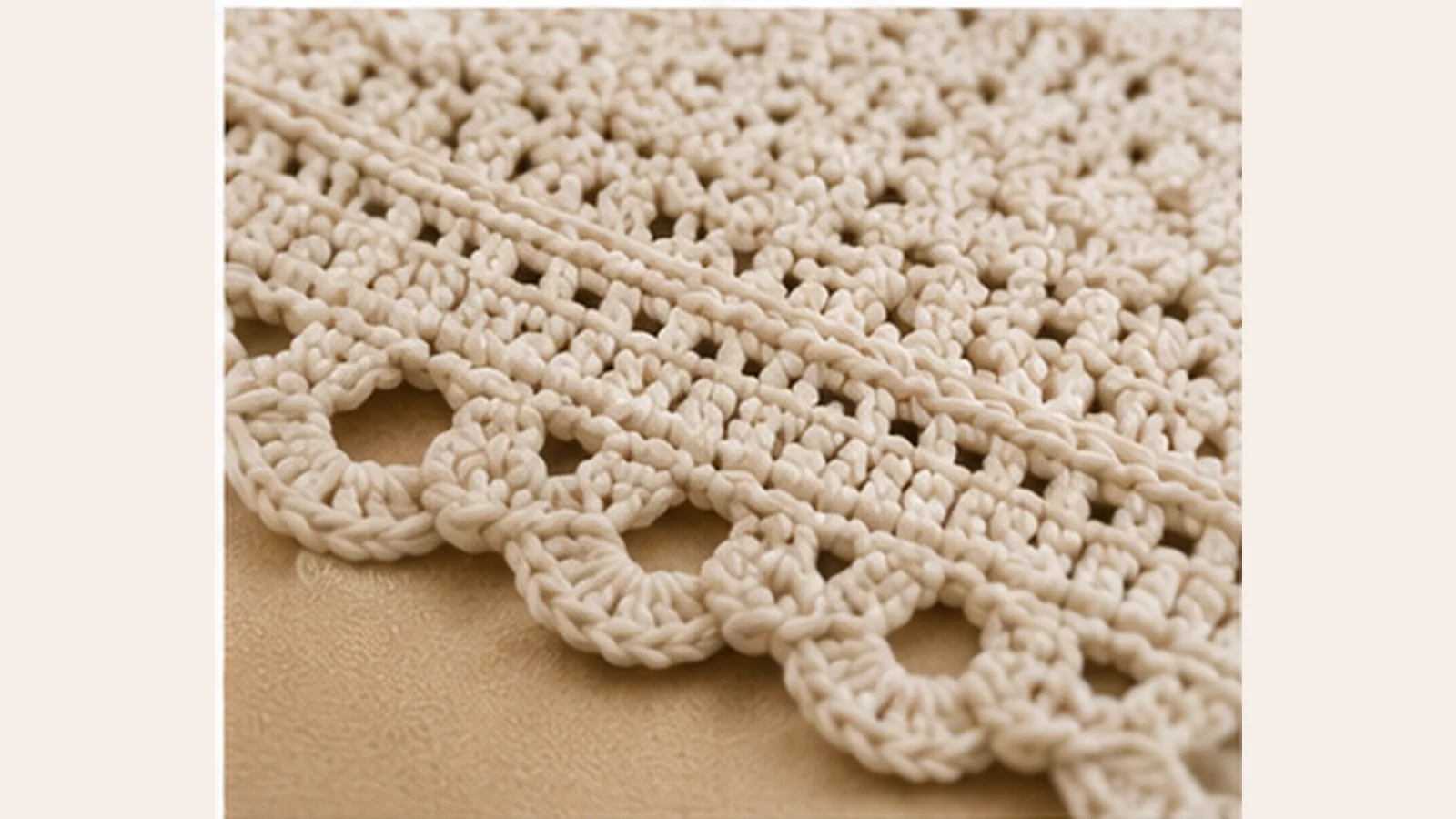
Crochet blanket borders with simple edging textured edging and contrasting color rounds

A well-planned border helps frame the blanket and finish the outer edges neatly.

More Crochet Blanket Ideas

Explore the Full 100+ Blanket Collection

From cozy throws to baby blankets and textured afghans, the full collection gives you plenty to choose from.


EXPLORE 100+ BLANKET PATTERNS →

Digital crochet blanket pattern bundle with throws baby blankets and afghans

Beginner Project

What Is the Easiest Crochet Blanket for a Beginner?

Start with a smaller throw or lap blanket using one repeatable stitch pattern and a yarn that is easy to see.

Choose a simple rectangleAvoid complicated shaping for the first blanket.
Use medium or bulky yarnThe stitches are easier to see and the fabric grows at a comfortable pace.
Pick one main stitchSingle, half double or double crochet lets you concentrate on tension and straight edges.
Count periodicallyMake sure you have not accidentally added or lost stitches along the row.

Before starting a large blanket, practice the stitch in a small swatch. Our Crochet for Beginners guide explains tension, counting rows and gauge in more detail.

Troubleshooting

Common Crochet Blanket Problems

The blanket gets narrower

You may be missing an edge stitch. Count the row and mark the first and last stitch if needed.

The blanket gets wider

Extra stitches at the edges or accidentally working into the turning chain can gradually increase the width.

The edges curl

Tension, stitch structure or an overly tight foundation row can distort the edge. A suitable border may help after the main problem is corrected.

The finished size is wrong

Compare gauge, yarn weight, hook size and repeat count. Small differences become significant across a large blanket.

Finishing & Care

Finishing a Crochet Blanket

Weave in yarn ends securely with a tapestry needle and follow the yarn label when washing or blocking the finished blanket. Different fibers react differently to heat, water and agitation, so the yarn care instructions should guide the finishing method.

Keep the yarn label: it is useful later when you need to remember the fiber content and washing instructions.
Crochet Blanket FAQ

Common Crochet Blanket Questions

What crochet stitch is best for a blanket?

There is no single best stitch. Beginners often prefer single, half double or double crochet, while textured blankets may use shells, post stitches, waves or repeated pattern combinations.

What yarn weight is best for crochet blankets?

Medium and bulky yarns are popular because they balance stitch visibility, warmth and speed. The best choice depends on the blanket style and how heavy you want the finished fabric to feel.

How much yarn do I need for a crochet blanket?

Yarn requirements vary widely with blanket size, yarn weight, stitch density and border. Use the pattern yardage when following a design, and allow extra when changing size or adding a larger border.

Do I need to make a gauge swatch for a blanket?

It is useful whenever finished dimensions matter. Gauge also helps estimate fabric density and whether the chosen hook creates the drape you want.

Is a crochet blanket a good beginner project?

Yes, especially a smaller rectangular throw using one repeated stitch. The main challenge is maintaining even tension and a consistent stitch count across many rows.

800+ Crochet Patterns

Want More Than Blankets?

Explore the full crochet collection with blankets, bags, granny squares, tops, baby projects and more.


EXPLORE 800+ CROCHET PATTERNS →

800 plus crochet patterns master collection with blankets bags granny squares and more

Posted on

Crochet Bag Guide | Styles, Yarn, Handles & Lining

Crochet bag guide with handmade tote bags, purses, yarn, handles and lining materials

Crochet Bag Guide

Crochet Bag Guide: Styles, Yarn, Stitches, Handles & Lining

A crochet bag can be soft and relaxed, firm and structured, tiny enough for essentials or large
enough for shopping and beach days. The best result comes from matching the bag style with the right yarn,
stitch texture, construction method and finishing details.

This guide explains the practical choices behind crochet totes, purses, crossbody bags, market bags,
drawstring pouches and granny-square styles. If you are still learning the basic stitches or getting used
to hook and yarn tension, start with our
Crochet for Beginners guide first, then come back here when you are ready to
turn those skills into a wearable project.

What makes a crochet bag work well

  • Choose a yarn that suits how much structure and stretch you want.
  • Use a stitch pattern dense enough for the bag’s purpose.
  • Plan the base, sides and opening before deciding on handles or straps.
  • Add lining or internal support when you want a more polished, stable finish.
  • Reinforce handles and attachment points because they carry most of the load.

Bag Styles

Popular Crochet Bag Styles to Explore

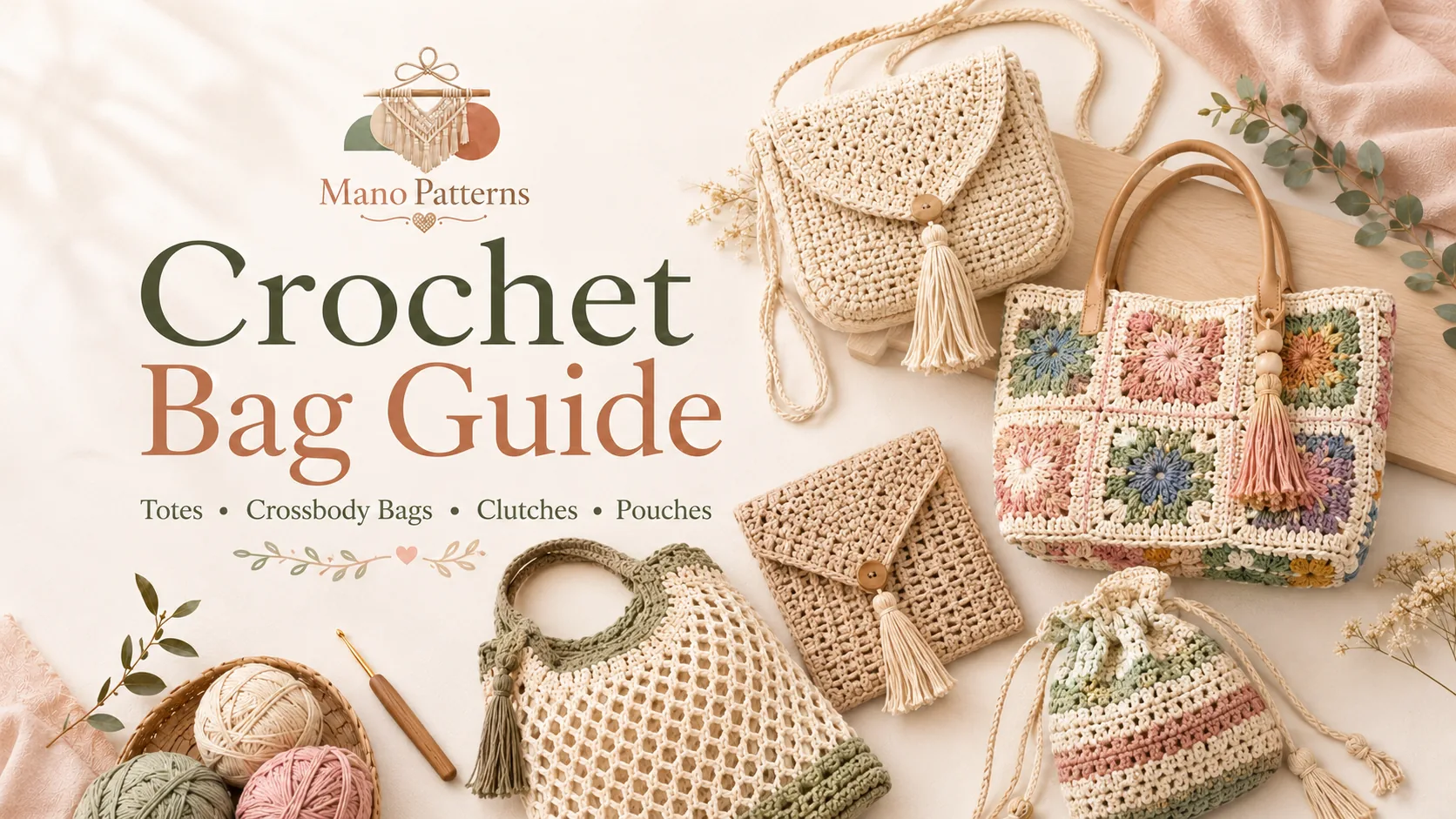
The bag books in this collection cover everything from crossbody purses and clutches to totes, market
bags and small drawstring pouches. The construction choices change depending on what the bag needs to do.

Crochet Tote Bag

A tote usually needs a roomy body, a stable opening and handles that can carry weight without stretching
too much.

Crossbody Bag

Crossbody styles benefit from a firmer fabric, a secure closure and a strap that keeps its length during use.

Market or Beach Bag

These can be more open and flexible. Mesh or lacy stitch patterns make the bag lighter, while stronger
yarn helps control excessive stretching.

Clutch or Small Purse

Smaller bags are a good place to experiment with texture, color, decorative closures, tassels and
interesting handles.

Drawstring Pouch

A drawstring creates both the closure and part of the design. The top edge needs enough structure to
open and close smoothly.

Granny Square Bag

Motifs can be joined into totes, purses and shoulder bags. The final shape depends on how many squares
are used and how they are arranged.

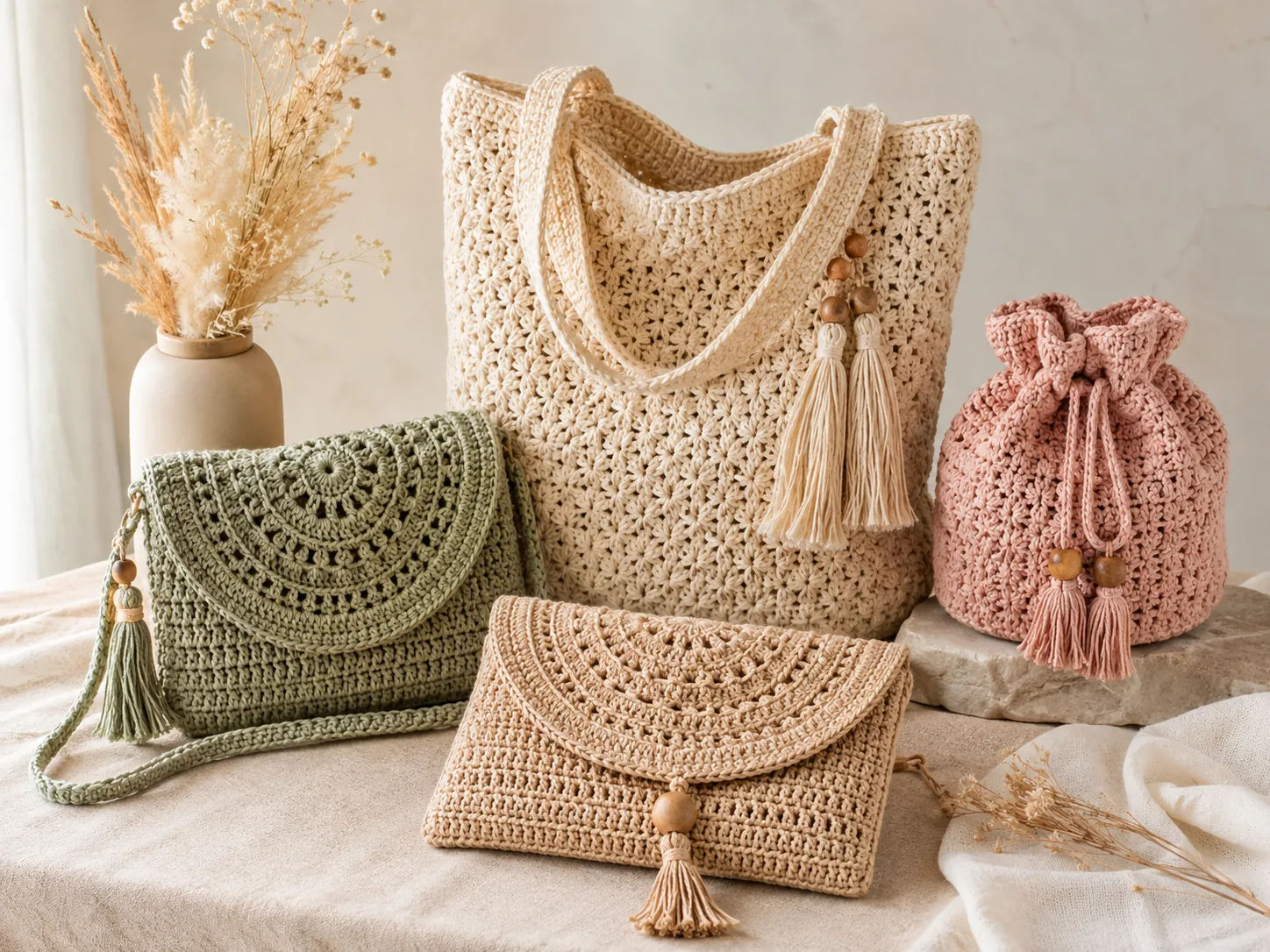
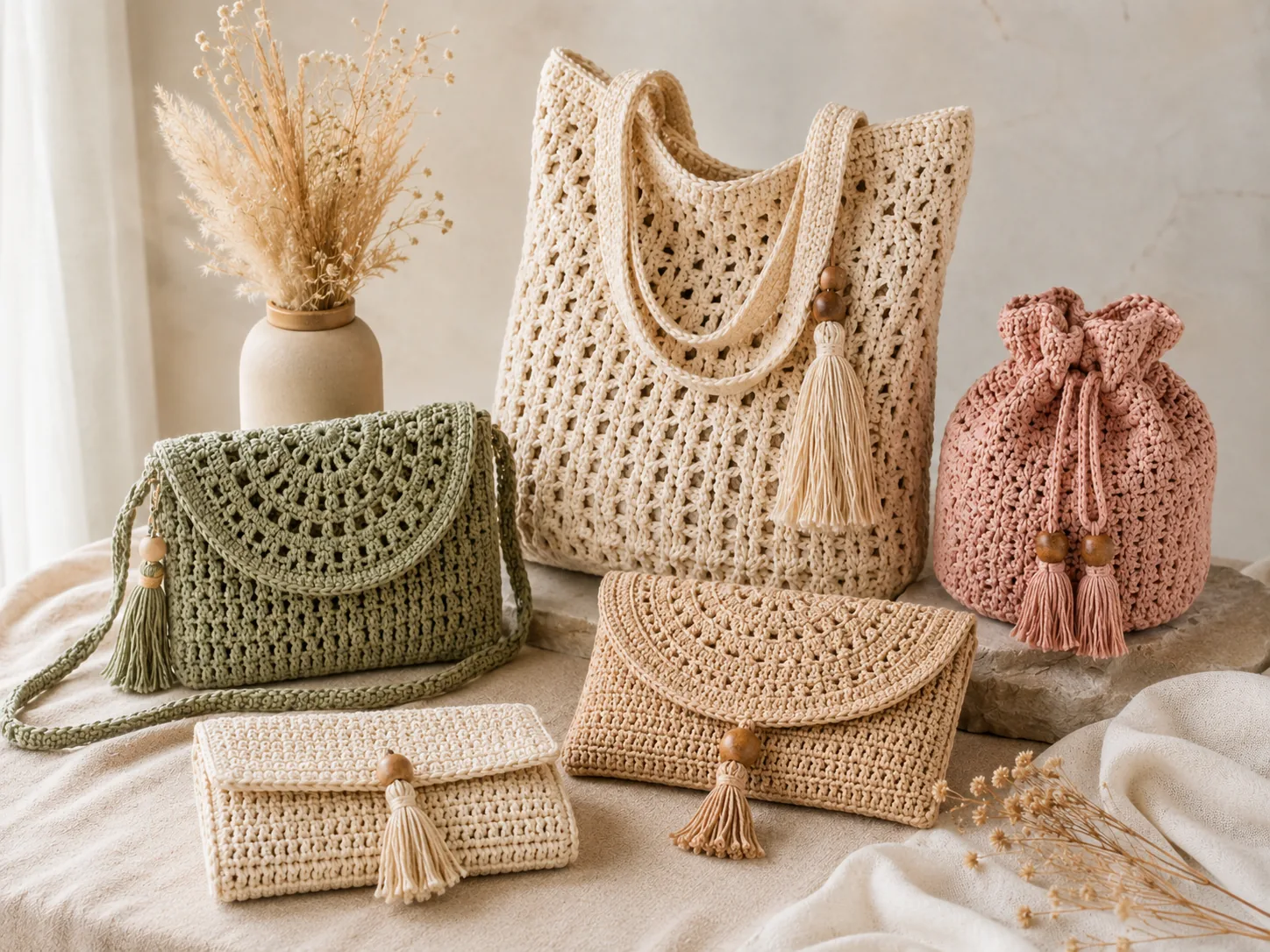
Handmade tote, crossbody, clutch and drawstring bag styles in cream, sage and blush tones

Choose the bag shape first, then match the yarn, stitch and finishing method to it.

You can browse the growing
Crochet Guides, Tutorials & Patterns hub
whenever you want to move between beginner skills and more project-focused guides.

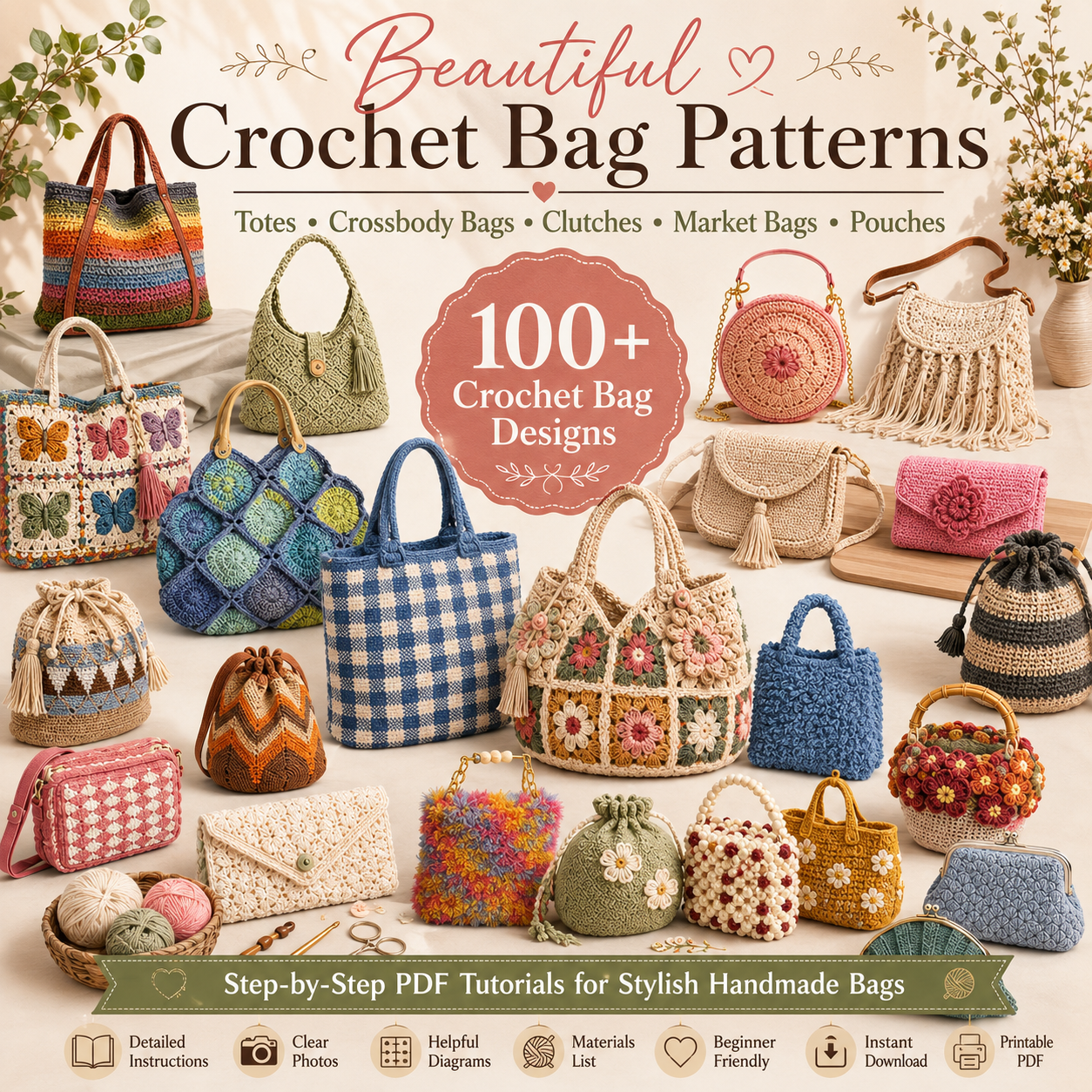
100+ Crochet Bag Patterns

Find a Bag You Want to Make

Explore 100+ crochet bag patterns for totes, purses, market bags, shoulder bags and more.


BROWSE 100+ BAG PATTERNS →

100 plus crochet bag patterns collection with totes purses and handmade bags

Materials

Best Yarn Choices for a Crochet Bag

Yarn affects far more than color. It changes stretch, weight, durability, stitch definition and how much
support a finished bag may need.

Cotton and cotton blends

Cotton is popular for bags because it shows stitch texture clearly and usually creates a more stable
fabric than very elastic yarns. It works especially well for totes, market bags and summer styles.

Nylon and strong synthetics

Some bag designs use nylon for extra durability and a firmer finish. This can be useful for structured
purses or straps that need to resist wear.

Wool and acrylic

These can create softer, cozier bags, but the amount of stretch depends on the yarn and stitch pattern.
A lining can help control movement.

Raffia, cord and specialty yarns

Firmer materials can give summer bags and structured totes a crisp shape, but they may feel stiffer in
the hands while crocheting.

Think about use, not just appearance: a bag carrying a phone, wallet and keys needs different
strength from a light decorative pouch.
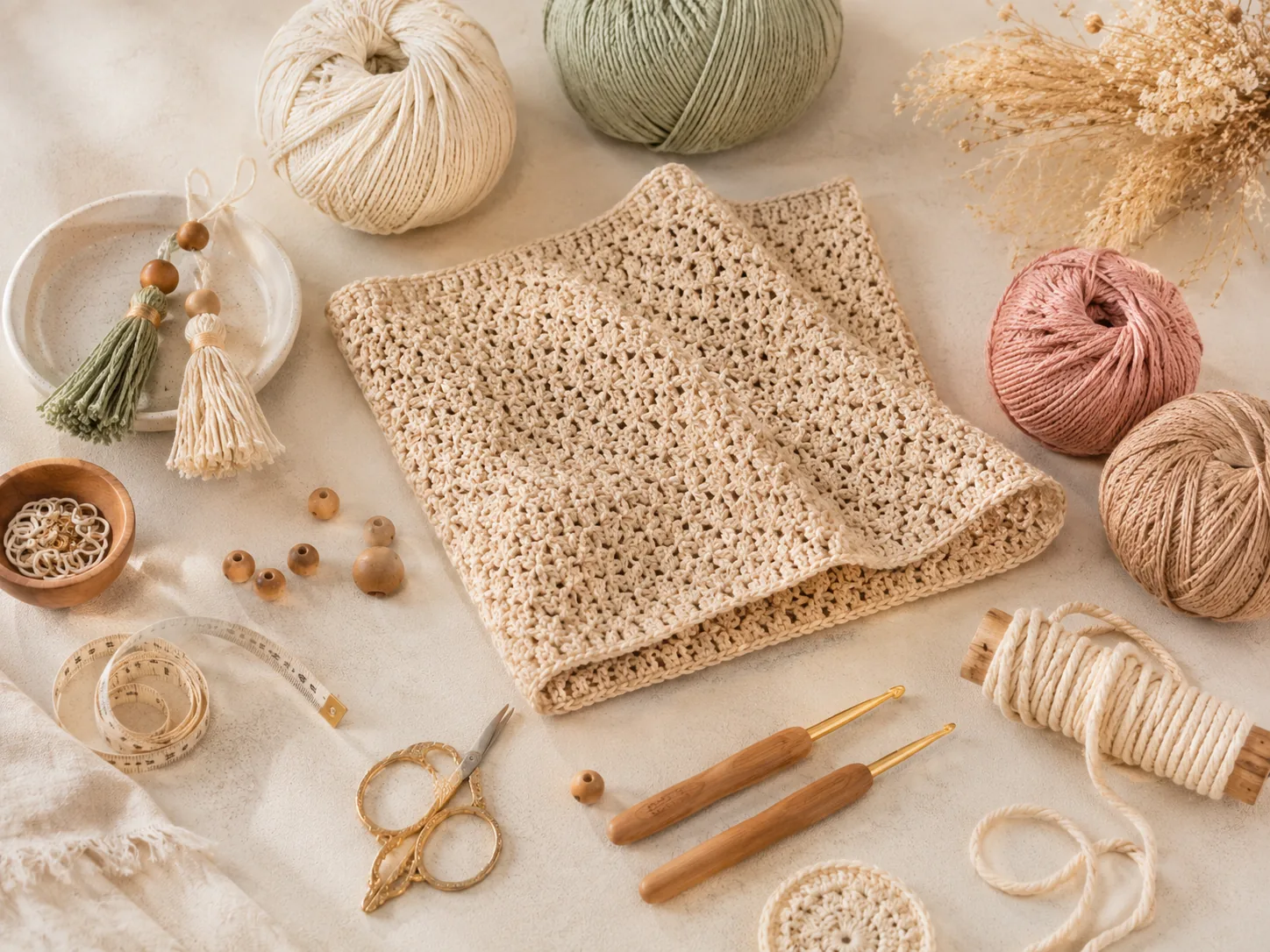
Yarn, crochet hooks, beads, tassels, measuring tape and bag-making materials on a neutral workspace

Bag yarn should be chosen for strength, stretch and structure as well as color.

If you are unsure how yarn weight and hook size work together, the yarn section in our
beginner crochet guide explains the basics before you start a larger bag project.

Fabric & Texture

Crochet Stitches That Work Well for Bags

The stitch pattern controls how dense, flexible and stretchy the bag fabric becomes.

Single Crochet

A dense basic stitch that works well when you want a firmer fabric and fewer gaps.

Half Double Crochet

Slightly taller and softer than single crochet while still creating a relatively solid fabric.

Double Crochet

Faster to build and more flexible, but it naturally creates more openness and may stretch more in a bag.

Mesh & Lace

Useful for market and beach bags when airflow and lightness matter more than keeping tiny items contained.

Textured Stitches

Raised or patterned stitches add visual interest but can use more yarn and create extra weight.

Granny Squares

Joined motifs combine color and structure. Seams and joins should be strong because they become part
of the bag’s load-bearing fabric.

Test the fabric before committing

Crochet a small swatch and pull it gently in several directions. A stitch that looks perfect lying flat may
behave very differently once the bag is carrying weight.

Construction

How Crochet Bags Are Commonly Constructed

There is no single construction method. Some bags are worked in one piece, while others use separate
panels, motifs or a shaped base that are joined later.

Flat Panels

Front and back panels can be crocheted separately and joined at the sides and base. This method makes
it easy to control the bag dimensions.

Base + Sides

A rectangular, oval or round base can be built first, then the body is worked upward from its edge.

Continuous Rounds

Working in rounds reduces seaming and is common for totes, bucket bags and market bags.

Joined Motifs

Granny squares or other motifs can be assembled into the final shape. Planning the layout first helps
avoid awkward seams or mismatched edges.

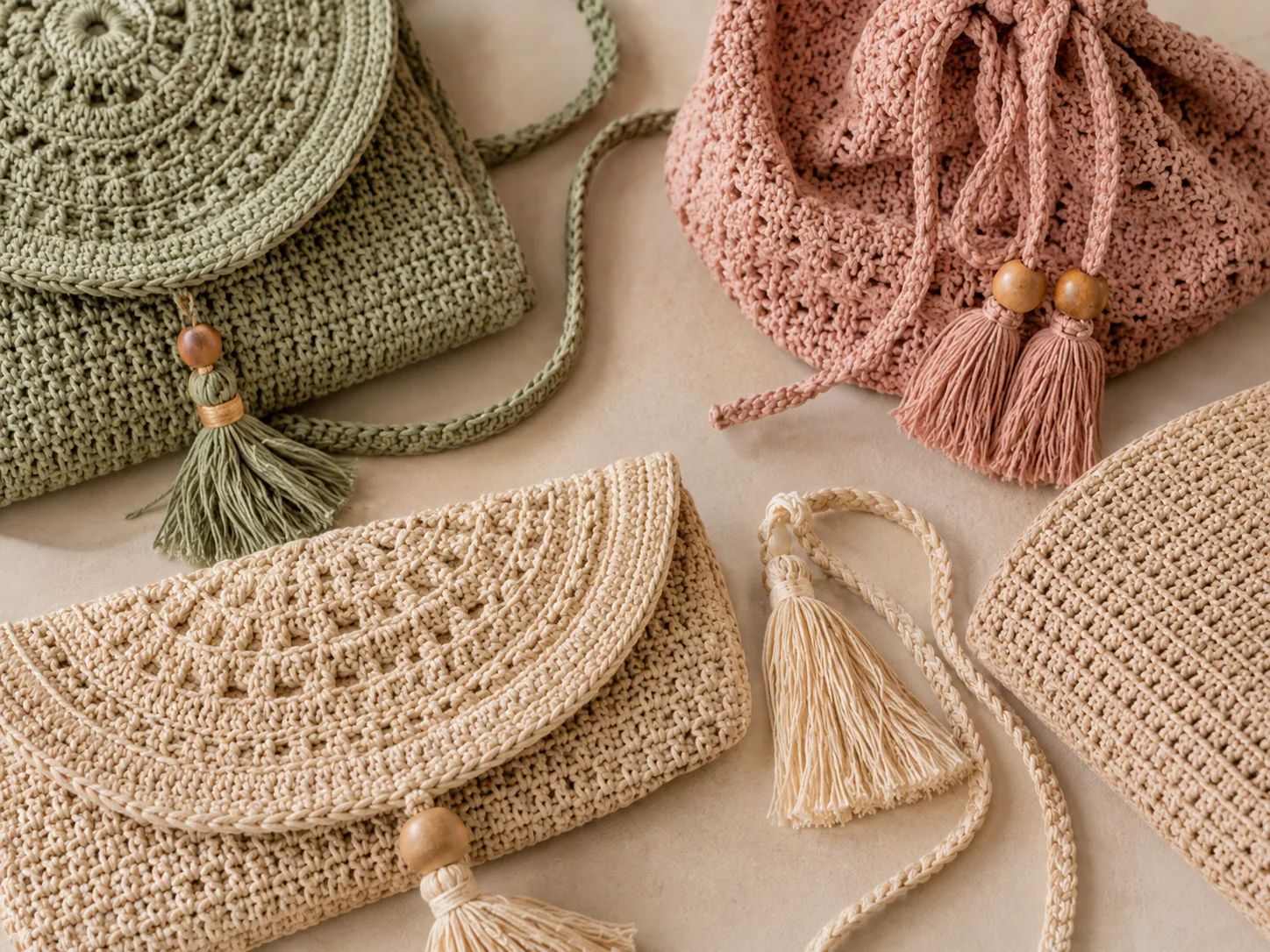
Crocheted bag panels and accessories showing different construction textures and shapes

Construction method affects the bag shape, seams, stability and finishing work.

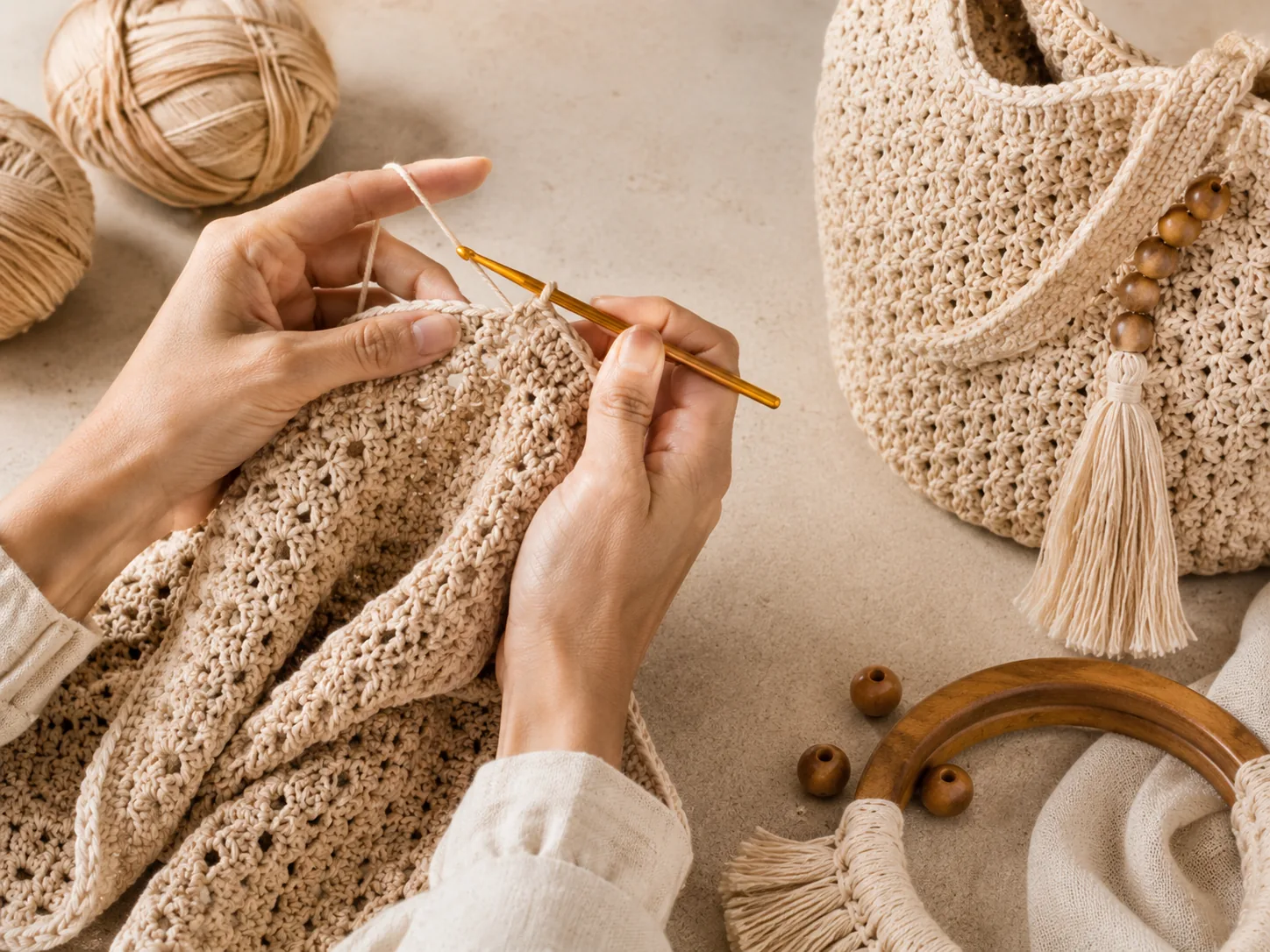
Hands crocheting a bag panel beside yarn, wooden handles, beads and a finished tote

Working slowly through the body, joins and handle areas helps keep the finished bag even and strong.

Crochet Bag Pattern Collection

Ready to Start Your Next Bag?

Choose from 100+ bag designs and find a style that fits your next project.


SEE THE BAG COLLECTION →

Crochet bag pattern bundle with tote purse and shoulder bag designs

Handles & Straps

How to Keep Crochet Bag Handles from Stretching

Handles often receive more stress than any other part of the bag, so this is where reinforcement matters most.

Crocheted handles

Keep them relatively dense and avoid very stretchy stitch patterns. Shorter handles usually show less
elongation than long shoulder straps.

Purchased handles

Wooden, bamboo, metal, leather-look and other ready-made handles can give the bag more structure and
change the overall style.

Reinforce attachment points: whether the handle is crocheted or purchased, spread the load
across several stitches instead of attaching it to a tiny area.

Finishing

Should You Line a Crochet Bag?

Not every crochet bag needs a lining, but lining can make a soft handmade bag feel dramatically more stable
and practical.

What lining can do

It helps keep small items from poking through open stitches, reduces stretching, hides the inside seams
and gives pockets or closures a stable surface.

Extra support

Structured bags may also use a firmer insert in the bottom. Some published bag projects suggest materials
such as felt, canvas or plastic canvas to increase stability.

Finished handmade bags showing handles, straps, drawstrings, tassels and structured shapes

Lining, reinforced bases and secure handles can turn a soft crochet piece into a practical everyday bag.

Closures & Details

Closures and Finishing Details for Crochet Bags

Drawstrings

Simple and flexible for pouches, bucket bags and casual styles.

Buttons

Useful for flaps and smaller bags when you want a lightweight closure.

Zippers

Provide a secure opening and usually work best when attached to a stable lining or reinforced edge.

Magnetic Snaps

Give totes and purses a neat closure without changing the exterior appearance too much.

Tassels & Charms

Decorative additions can change a simple base design without changing the bag construction.

Edging

A firm border around the opening can make the top edge look cleaner and resist stretching.

More Crochet Bag Ideas

Explore the Full 100+ Bag Collection

Totes, purses, market bags, clutches and more — all together in one digital collection.


EXPLORE 100+ BAG PATTERNS →

Digital crochet bag pattern collection with many handmade bag styles

Troubleshooting

Common Crochet Bag Problems and How to Prevent Them

The bag stretches too much

Use a denser stitch, firmer yarn, tighter gauge, lining or internal support depending on the design.

The handles keep getting longer

Use less-stretchy construction, reinforce the strap or switch to purchased handles for more stability.

The base sags

A denser base, lining or removable structural insert can help distribute the weight more evenly.

The opening curls or collapses

Add a firmer final round, edging, lining support or hardware depending on the style.

Crochet Bag FAQ

Common Questions About Crochet Bags

What yarn is best for a crochet bag?

It depends on the style, but stable yarns such as cotton, cotton blends, nylon, cord or raffia are
popular when the bag needs durability and structure.

What is the easiest crochet bag for a beginner?

A simple rectangular tote or small pouch using a basic dense stitch is easier than a highly shaped bag
with complex hardware. If basic stitches still feel unfamiliar, review the
Crochet for Beginners guide before starting.

Do crochet bags need lining?

No, but lining can reduce stretch, stop small items from slipping through the stitches and give the bag
a cleaner interior finish.

Can you make a crochet bag with granny squares?

Yes. Joined granny squares can form totes, shoulder bags and purses. Strong joins and a planned layout
are important because the seams become part of the structure.

How do you make a crochet bag more sturdy?

Use a firmer yarn, dense stitch pattern, strong seams, reinforced handles and—when appropriate—a lining
or base insert.

800+ Crochet Patterns

Want More Than Bags?

Explore the full crochet collection with bags, blankets, granny squares, tops, baby projects and more.


EXPLORE 800+ CROCHET PATTERNS →

800 plus crochet patterns master collection with bags blankets granny squares and more

Working with taller crochet stitches? See our
Double Crochet Stitch Guide for turning chains,
row counting and common mistakes.

Posted on

Crochet for Beginners: Hooks, Yarn, Basic Stitches & First Projects

Crochet for Beginners

Crochet for Beginners: Hooks, Yarn, Basic Stitches & First Projects

Learning crochet for beginners does not require dozens of stitches or a huge collection
of tools. A crochet hook, suitable yarn and a few basic movements are enough to begin making useful
projects and understanding simple crochet patterns.

This beginner guide walks through the supplies you actually need, how yarn and hook size work together,
the first stitches worth learning, tension, pattern abbreviations, gauge and a few good first-project ideas.
The goal is to give you a clear foundation without making crochet feel more complicated than it is.

Start simple

  • Choose a smooth, medium-weight yarn that makes each stitch easy to see.
  • Use the hook size suggested for the yarn or pattern instead of guessing.
  • Learn the chain, slip stitch, single crochet, half double crochet and double crochet first.
  • Practice even tension before worrying about speed.
  • Begin with a small project or practice swatch so mistakes are easy to fix.

Getting Started

What You Need to Start Crochet for Beginners

Crochet can be started with very little equipment. In fact, the beginner lessons in the crochet books in this
collection repeatedly come back to the same essentials: yarn, a crochet hook and a tapestry or yarn needle.

Crochet Hook

Hooks come in different diameters. For example, a pattern normally tells you which size to start with, and you may
adjust slightly when gauge requires it.

Yarn

Yarn varies in thickness, fibre and texture. For example, a smooth medium or worsted-weight yarn is
easier to see and handle than very fine, fuzzy or novelty yarn.

Tapestry Needle

A blunt yarn needle is useful for weaving in loose ends and finishing projects neatly.

Helpful Extras

Scissors, stitch markers and a tape measure are inexpensive extras that become useful as soon as you
move from practice swatches to full projects.

Beginner-friendly choice: a smooth, light-colored yarn makes it much easier to see the top
loops of each stitch than black, fuzzy or highly textured yarn.
Crochet yarn, hooks and beginner stitch samples arranged on a soft neutral workspace

You only need a few basic tools to begin learning crochet.

Yarn & Hook

How to Choose Crochet Yarn and Hook Size

Yarn and hook size work together. As a result, the combination affects stitch size, fabric density, drape and the
final measurements of a project.

Read the yarn label

Yarn labels commonly tell you the yarn weight, fibre content, amount in the ball or skein and care
instructions. Many also provide a suggested crochet hook range.

Follow the pattern first

When you are using a pattern, begin with its recommended yarn category and hook size. If your stitches
do not match the required gauge, the hook size can be adjusted.

The Craft Yarn Council maintains a standardized yarn-weight system that groups yarn from very fine to jumbo
and gives common hook-size ranges. However, these ranges are useful as guidance, but the gauge written in the pattern
remains more important for a specific project.

See the Craft Yarn Council yarn weight standards →

Technique

Holding the Hook, Yarn and Finding Comfortable Tension

There is no single perfect hand position. Instead, what matters is that the hook moves comfortably and the yarn
feeds at a steady tension.

Beginners often crochet too tightly because they are concentrating on controlling every loop. As a result, very tight
stitches make it difficult to insert the hook and can make the hands tire quickly. If the work feels stiff
and the hook is difficult to move, deliberately relax your yarn hand and make a short practice chain again.

Tight stitches

Relax your grip, avoid pulling each loop firmly against the hook and practice making several chains
with the loops resting naturally on the hook shaft.

Loose stitches

Add a little more control with the yarn hand and make sure the working yarn is not feeding freely
without resistance.

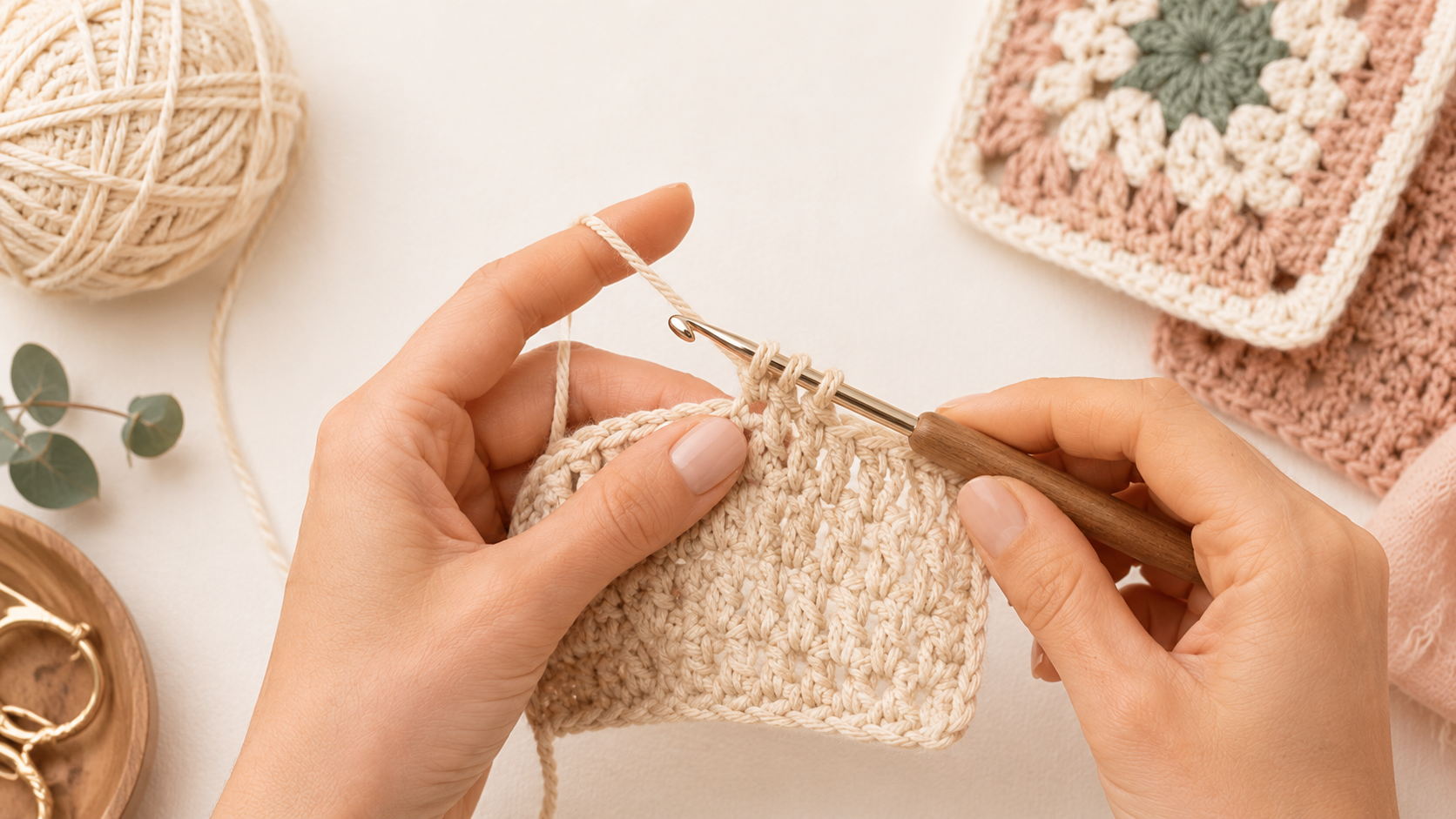
Hands practicing crochet tension while working a simple cream crochet swatch

Aim for comfortable, repeatable tension rather than pulling every stitch tight.

First Skills

Start with a Slip Knot and Foundation Chain

First, the chain is one of the crochet skills most beginners learn and it forms the starting foundation
for many projects worked in rows.

Slip knot

Make an adjustable loop in the yarn and place it on the hook. Then, tighten it enough to sit securely while
still allowing the loop to slide along the hook.

Foundation chain

Yarn over the hook and draw the yarn through the loop already on the hook. Next, repeat the movement to build a chain.
Finally, try to keep each chain close to the same size.

Do not make the starting chain too tight

However, a very tight foundation chain can make the first row difficult and may pull the lower edge of the project
inward. By contrast, smooth, relaxed chain stitches are easier to work into.

Basic Crochet Stitches

5 Crochet Stitches Beginners Should Learn First

These stitches and movements appear constantly in beginner crochet projects. Therefore, learning them gives you
enough vocabulary to start reading many simple patterns.

1. Chain — ch

Creates a foundation, spacing between stitches and turning chains.

2. Slip Stitch — sl st

Used for joining, moving across stitches and creating very low-profile crochet.

3. Single Crochet — sc

A short, dense stitch that is excellent for practicing consistent stitch placement.

4. Half Double Crochet — hdc

Taller than single crochet and useful when you want a little more height without a very open fabric.

5. Double Crochet — dc

A taller stitch used throughout blankets, garments, granny squares and many other crochet projects.

Important: These abbreviations use U.S. crochet terminology. U.K. terminology uses different
names for several of the same stitch structures.
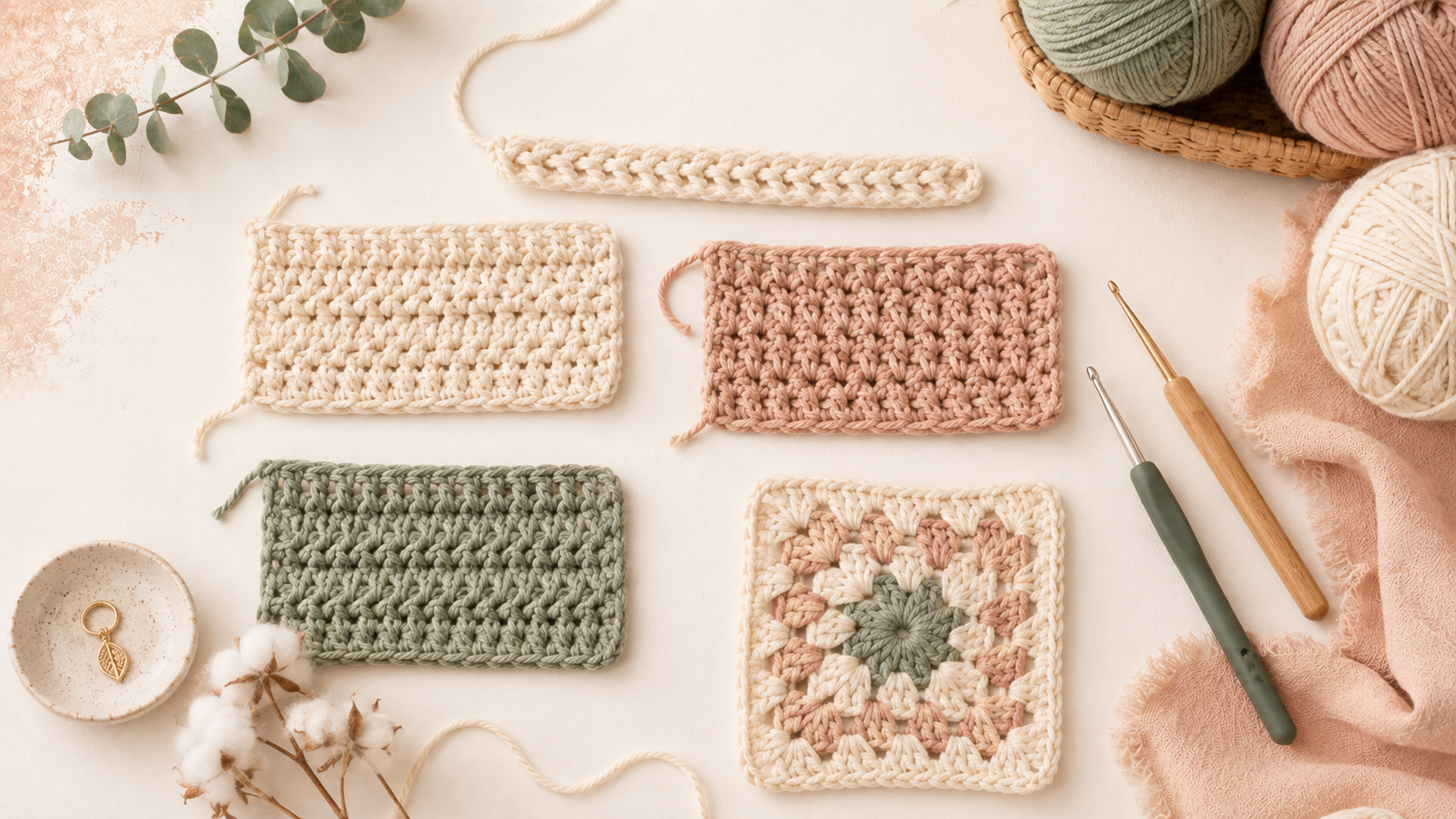
Beginner crochet stitch samples and simple crochet pieces in cream, blush and sage yarn

Practice basic stitches in small samples before using them in a larger project.

Pattern Reading

U.S. vs U.K. Crochet Terms: Check Before You Start

However, a pattern written in U.S. terminology can use the same stitch name differently from a U.K. pattern.
Therefore, checking the terminology before crocheting prevents major mistakes.

Single crochet (U.S.)

Called double crochet in U.K. terminology.

Half double crochet (U.S.)

Called half treble in U.K. terminology.

Double crochet (U.S.)

Called treble in U.K. terminology.

Want a deeper explanation of this stitch? Our
Double Crochet Stitch Guide covers turning chains, counting rows,
common mistakes and useful variations in more detail.

Slip stitch

The stitch itself is the same, although the abbreviation may appear as sl st or ss.

In addition, the Craft Yarn Council publishes a crochet abbreviation reference that also shows common U.S. and U.K.
terminology differences.

Check standardized crochet abbreviations →

Keep Your Edges Straight

Counting Crochet Stitches and Turning Rows

Accidentally adding or losing stitches is one of the most common reasons a beginner rectangle starts
getting wider or narrower.

Count the stitches

Count the top loops across the row occasionally instead of waiting until the piece has changed shape.
In addition, stitch markers can help identify the first and last stitch.

Know whether the turning chain counts

Patterns do not all treat turning chains the same way. For that reason, read the pattern notes instead of assuming the
turning chain is automatically a stitch.

A habit that saves time

Meanwhile, stop every few rows, spread the work flat and look at the overall shape. As a result, catching an accidental increase
or decrease early is much easier than undoing a large section later.

Sizing

What Crochet Gauge Means and When It Matters

In other words, gauge describes how many stitches and rows fit into a measured area. It is especially important for
garments, fitted accessories and projects where the final dimensions matter.

For example, two people can use the same yarn and hook but produce different-sized stitches because their tension is
different. Therefore, a pattern may tell you to change hook size until your swatch matches its stated gauge.

Make a gauge swatch

Crochet a sample larger than the measurement area, let the stitches relax, then measure the center of the
swatch. After that, if the stitch count is not close to the pattern gauge, adjust the hook size and test again.

Do not skip finishing tests on fitted projects: some yarns relax, grow or change after
washing or blocking. Testing the swatch can show you what the finished fabric is likely to do.

Beginner Crochet Projects

Easy Things to Crochet for Beginners

In general, a good first project repeats a small number of stitches and lets you practice without complicated shaping.

Practice Swatches

Small squares let you learn a stitch, count rows and experiment with tension without pressure.

Simple Scarf

A rectangle worked back and forth is useful for practicing row edges and consistent stitch counts.

Dishcloth or Washcloth

A small square project gives useful practice while producing something practical.

Basic Granny Square

A classic next step when you are ready to learn working in rounds, corners and repeated stitch groups.

Ready for a useful project with more structure? For example, our
Crochet Bag Guide explains yarn, stitch density, handles, lining and construction for totes, purses and market bags.
If you prefer a simple larger project built from repeated rows, the
Crochet Blanket Guide covers yarn, sizing, gauge, stitches and borders.

800+ Crochet Patterns

Explore the Full 800+ Crochet Patterns Master Bundle

When you are ready to move from practice stitches into real projects, the complete crochet collection
brings together blankets, granny squares, crochet jewelry, bags, baby projects, tops, kitchen crochet
and more in one large digital library.

800+ Patterns
Multiple Crochet Categories
Digital PDF Collection


GET THE FULL 800+ CROCHET BUNDLE →

800 plus crochet patterns master bundle with blankets granny squares jewelry bags baby projects and tops

Troubleshooting

Common Beginner Crochet Problems

The hook will not fit into the stitches

Your tension may be too tight. Instead, relax the working yarn and avoid pulling loops hard against the hook.

Rows keep getting narrower

You may be missing the first or last stitch. Count the row and mark the edge stitches if needed.

The piece keeps getting wider

You may be working twice into an edge stitch or treating a turning chain as an extra stitch.

The finished project is the wrong size

Check your yarn, hook and gauge. As a result, small differences repeated across many stitches can change the final size.

Crochet for Beginners FAQ

Beginner Crochet Questions

What is the easiest crochet stitch for a beginner?

First, start with the chain, then practice single crochet. Once those movements feel comfortable, move to
half double crochet and double crochet.

What yarn is easiest for learning crochet?

For example, a smooth, light-colored medium-weight yarn is usually easier to see and control than very dark, fuzzy,
slippery or extremely fine yarn.

How long does it take to learn crochet?

The basic movements can be learned quickly, but consistent tension and comfortable stitch placement
improve through repetition. In practice, short, regular sessions are more useful than trying to master
everything at once.

Do I need to learn every crochet stitch before using patterns?

No. Instead, learn the common basics first and add new stitches as individual projects require them. Most
patterns define unusual stitches or include a special-stitch section.

Should beginners use U.S. or U.K. crochet terminology?

Either is fine. Therefore, the important thing is to identify which terminology a pattern uses before you begin,
because several stitch names are different.

Ready for More?

Build Your Crochet Project Library

Use the basic stitches from this guide as your foundation, then explore a large variety of crochet
projects across blankets, granny squares, accessories, bags, clothing and home projects.


GET THE FULL 800+ CROCHET BUNDLE →

Large digital crochet pattern collection with multiple project categories