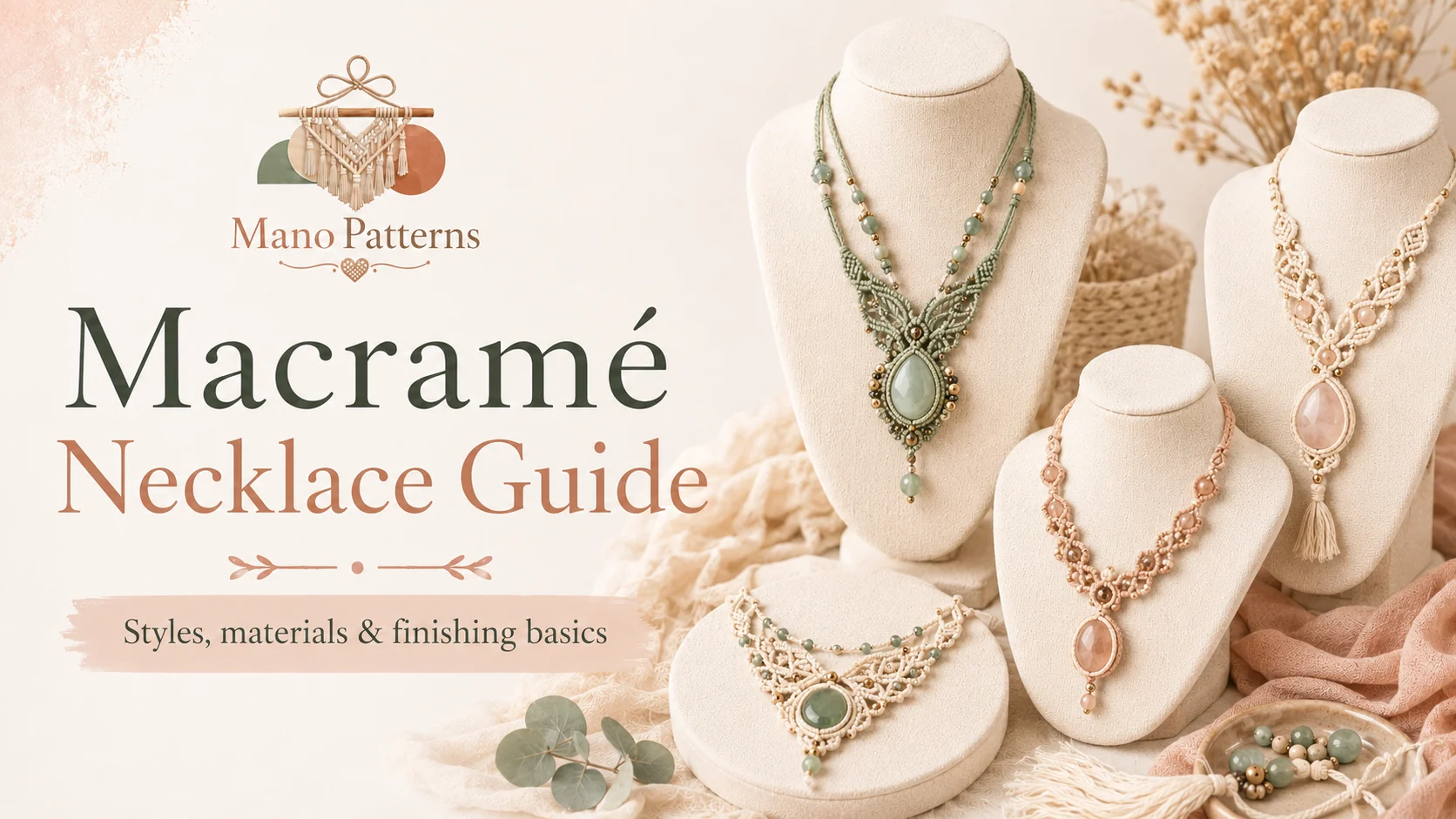
Macrame Necklace Patterns: Styles, Knots, Cord, Beads & Closures
A macrame necklace can be as simple as a narrow knotted cord with one focal bead,
or as detailed as a micro-macramé piece built from fine cord, seed beads, crystals and repeated
double half hitch patterns. The structure you choose changes the amount of cord, the knots you need,
the type of beads that will fit and the best way to finish the necklace.
This guide explains the main necklace styles, useful macramé knots, cord choices, bead and focal-piece
considerations, tools, closures and finishing decisions so you can understand a pattern before you start.
- Choose the necklace style and closure before cutting all of your cord.
- Test bead holes with the exact cord you plan to use.
- Secure the work to a board so repeated knots stay aligned.
- Check the necklace length and focal placement before permanently finishing the ends.
Common Macrame Necklace Styles
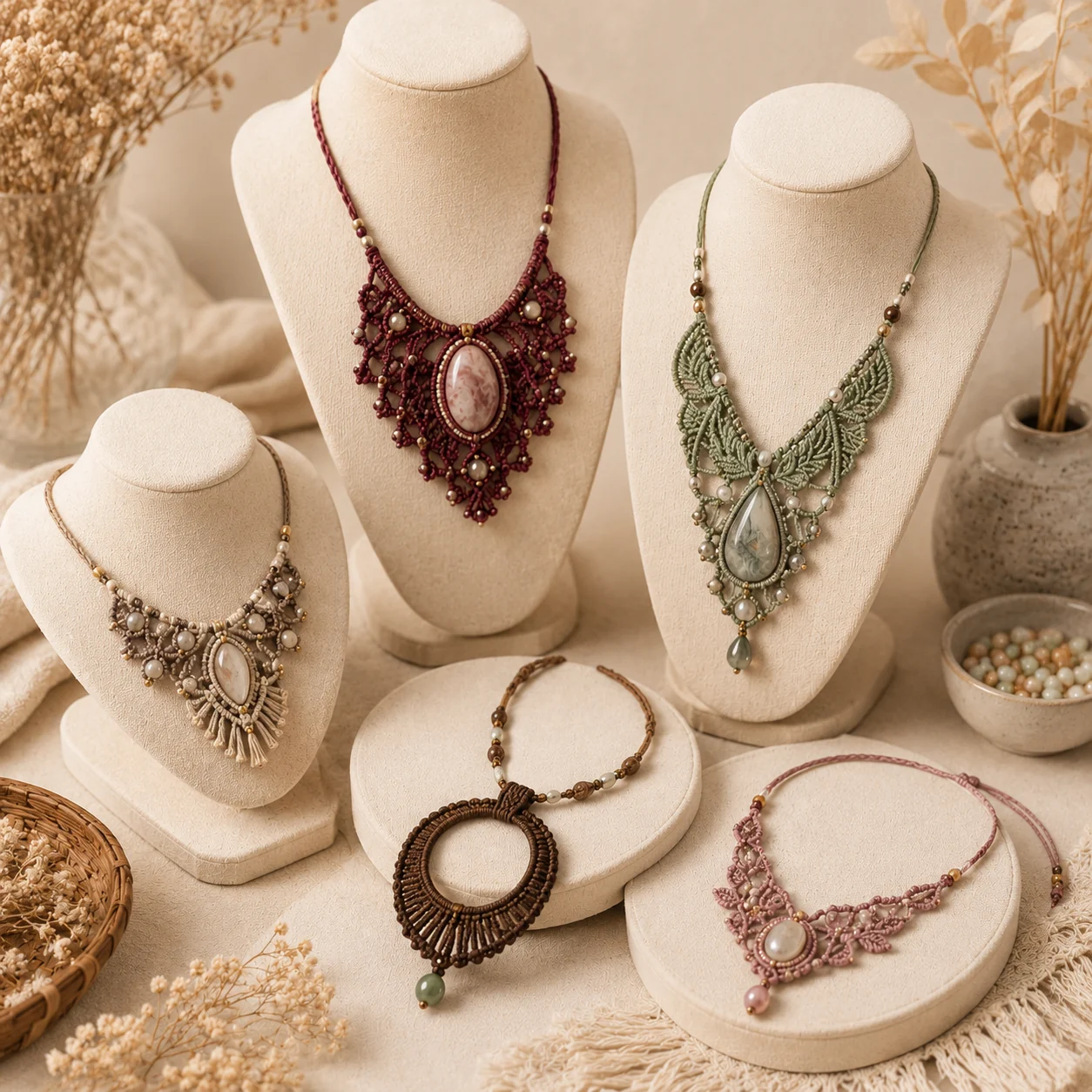
The jewelry books in this collection include everything from square-knot charm necklaces and seed-bead
spirals to chokers, pendants, openwork designs, asymmetrical necklaces and advanced micro-macramé pieces.
Knotted Cord & Charm Necklaces
A simpler necklace can use repeated square knots or other basic knot sequences with a charm, bead or
small pendant as the focal point.
Beaded & Spiral Necklaces
Beads can be incorporated into repeated knot sections, while half-knot spirals create a naturally
twisted cord structure.
Chokers & Openwork Designs
Wider choker-style pieces use more cords and repeated knot patterns to create a lace-like or structured
section around the neck.
Micro-Macramé & Focal Necklaces
Fine cord, seed beads, cabochons, carved beads and other focal pieces can be combined with detailed
double half hitch and square-knot work.
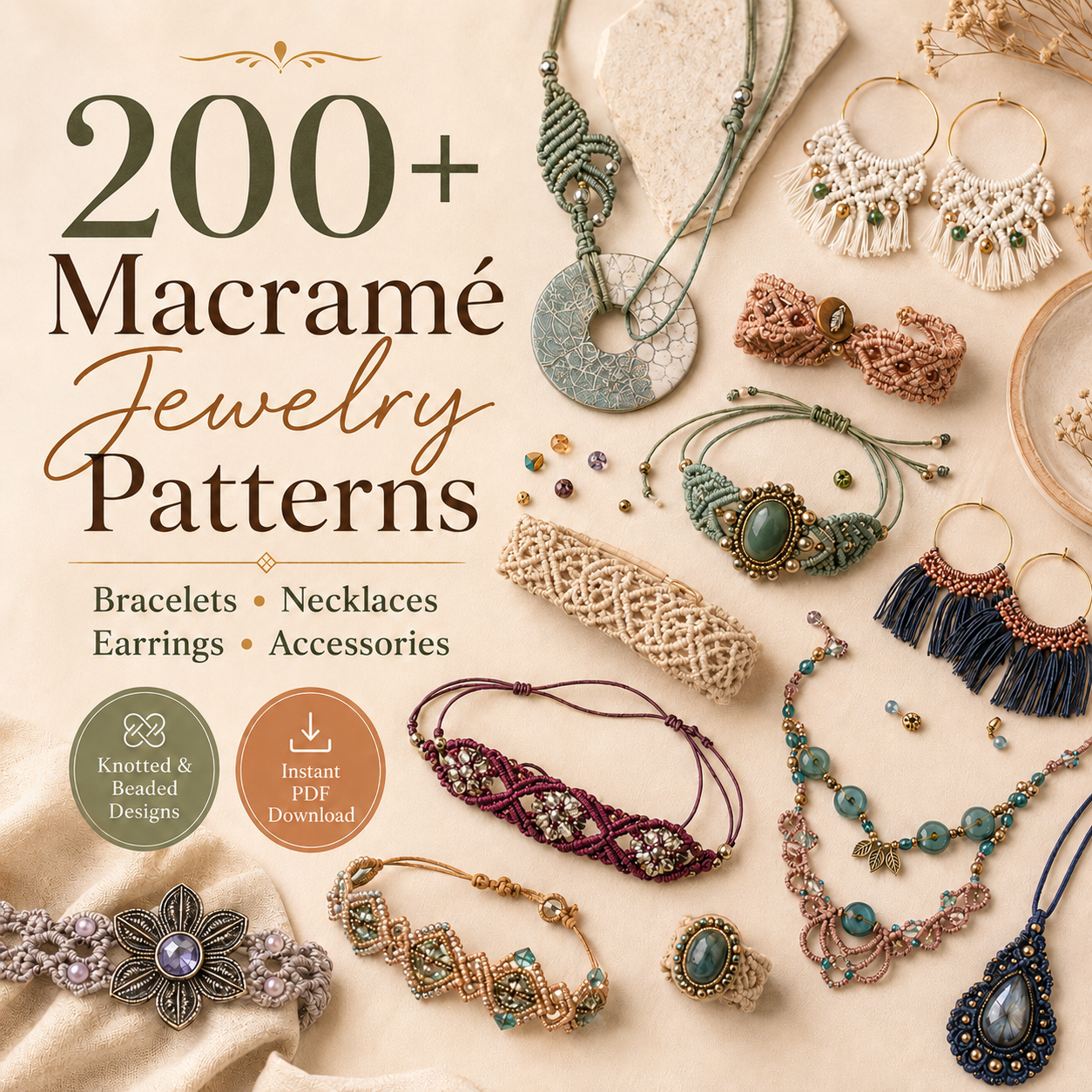
Get the Full 200+ Macramé Jewelry Patterns Bundle
Explore a large jewelry collection with necklaces, chokers, pendants, bracelets, earrings,
beaded projects and detailed micro-macramé designs.
Multiple Necklace Styles
Beginner to Detailed
Useful Knots for Macrame Necklaces
Necklace patterns often combine a few core knots in different directions rather than relying on a large
number of completely different techniques.
Square Knot
Square knots can build flat sections, cords, decorative bands and repeated structures around filler cords.
Half-Knot Spiral
Repeating the same half of the square knot creates a spiral effect that works well in necklace cords and
decorative sections.
Double Half Hitch
Double half hitch knots are especially useful for lines, curves, borders and detailed micro-macramé motifs.
Lark’s Head
Lark’s head and reverse lark’s head knots are practical for attaching cords to a holding cord, ring or
another part of a jewelry structure.
Uneven tension is one of the fastest ways to make a necklace edge or motif drift out of shape.
Choosing Cord, Beads & Tools
Jewelry-scale macramé uses much finer materials than wall hangings or plant hangers, especially when beads
and detailed motifs are involved.
Fine waxed and nylon cords
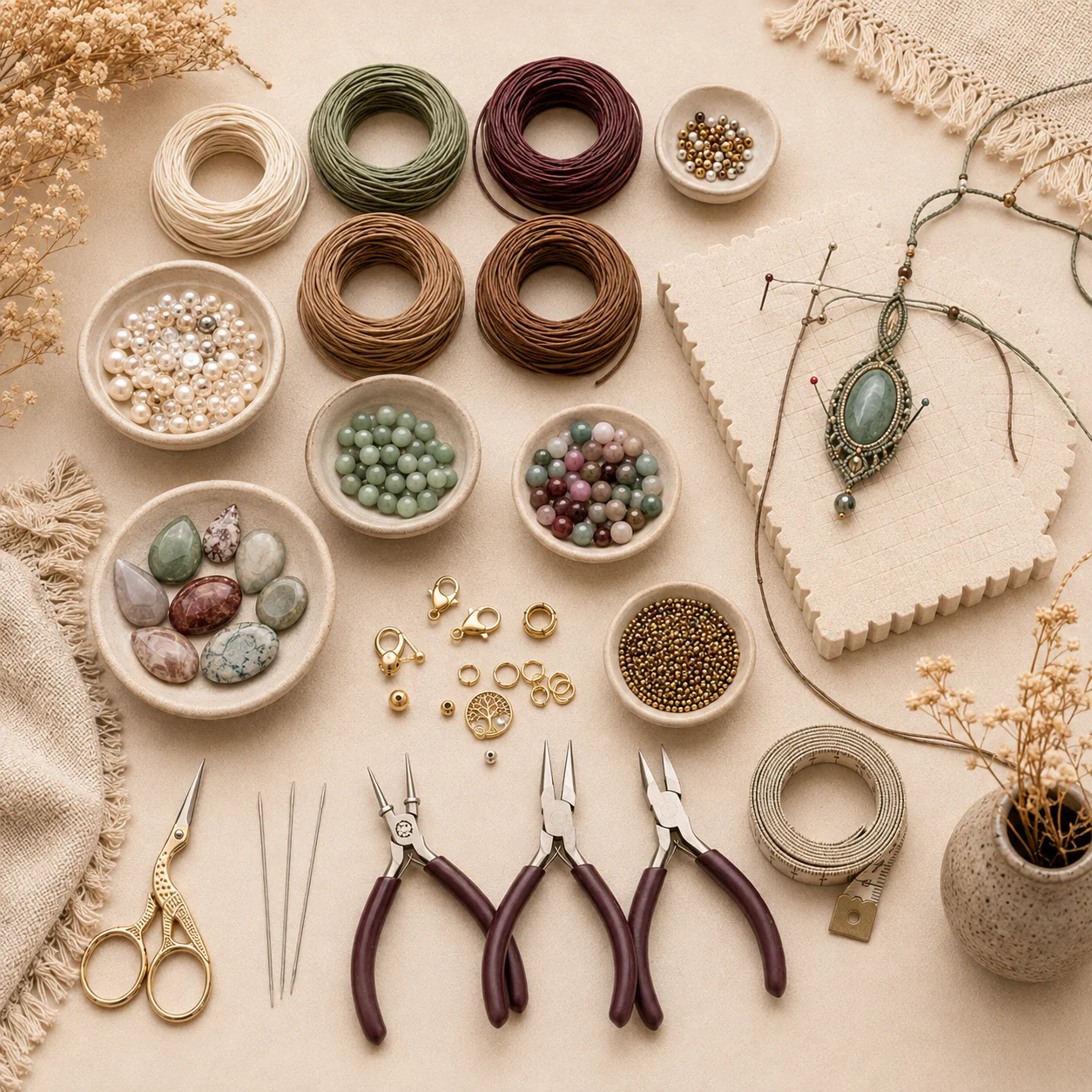
The jewelry sources use fine waxed thread and nylon micro-macramé cords because they hold small knots
clearly and work with beads. Fine jewelry threads in the books are commonly around the sub-1mm range.
Natural fibers
Cotton, linen, hemp and other natural fibers can also be used. They create a softer handmade look, but
their ends are normally secured differently from meltable synthetic cords.
Semiprecious stones and pearls can have surprisingly small or rough holes. Check the actual bead with your
chosen cord before planning an entire beaded section.
Detailed jewelry work may also use needles, pliers, crimping tools or reaming tools depending on the findings.
Using Beads, Cabochons & Pendants
The focal element often determines how the rest of the necklace should be constructed.
Seed Beads
Small seed beads add color and sparkle between knots, especially in micro-macramé. The cord still needs
to pass comfortably through every bead used in the design.
Large Focal Beads
Carved beads, lampwork beads and other larger focal pieces can become the center of a necklace, with knot
work used to frame or support them.
Cabochons
Cabochons and cameos can be mounted and framed with beads and knotting to create a more substantial
centerpiece.
Asymmetrical Elements
Not every necklace has to mirror perfectly from side to side. Some jewelry designs deliberately combine
knots, beads and findings in an asymmetrical arrangement.
Macrame Necklace Closures & Findings
Choose the finishing method early because the closure changes the usable necklace length and the way the
final cords must be secured.
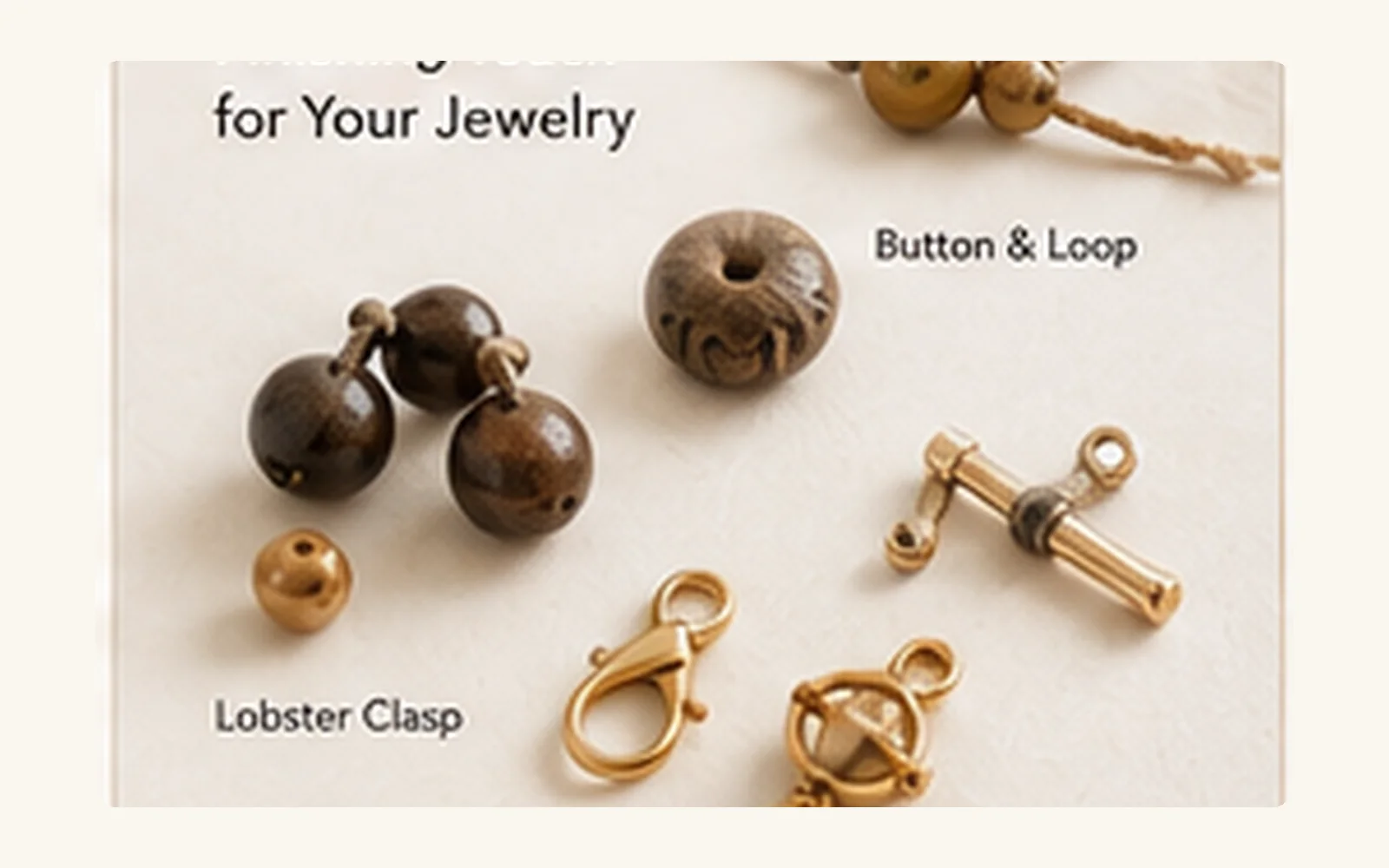
Sliding Closure
A knotted sliding closure is used in many macramé necklaces and bracelets because it allows the wearer
to adjust the length when putting the piece on or taking it off.
Button Fastener
Buttons can serve as decorative focal pieces or as fasteners when paired with a correctly sized loop.
Metal Clasps & Rings
Jewelry findings such as clasps, rings and crimps can create a more conventional necklace finish when the
pattern is designed around them.
Securing Cord Ends
Synthetic cords may be carefully heat-sealed when appropriate, while natural fibers are commonly sewn or
otherwise secured so the final knotting does not unravel.
How to Approach a Macrame Necklace Pattern
A little preparation makes detailed necklace work much easier to control.
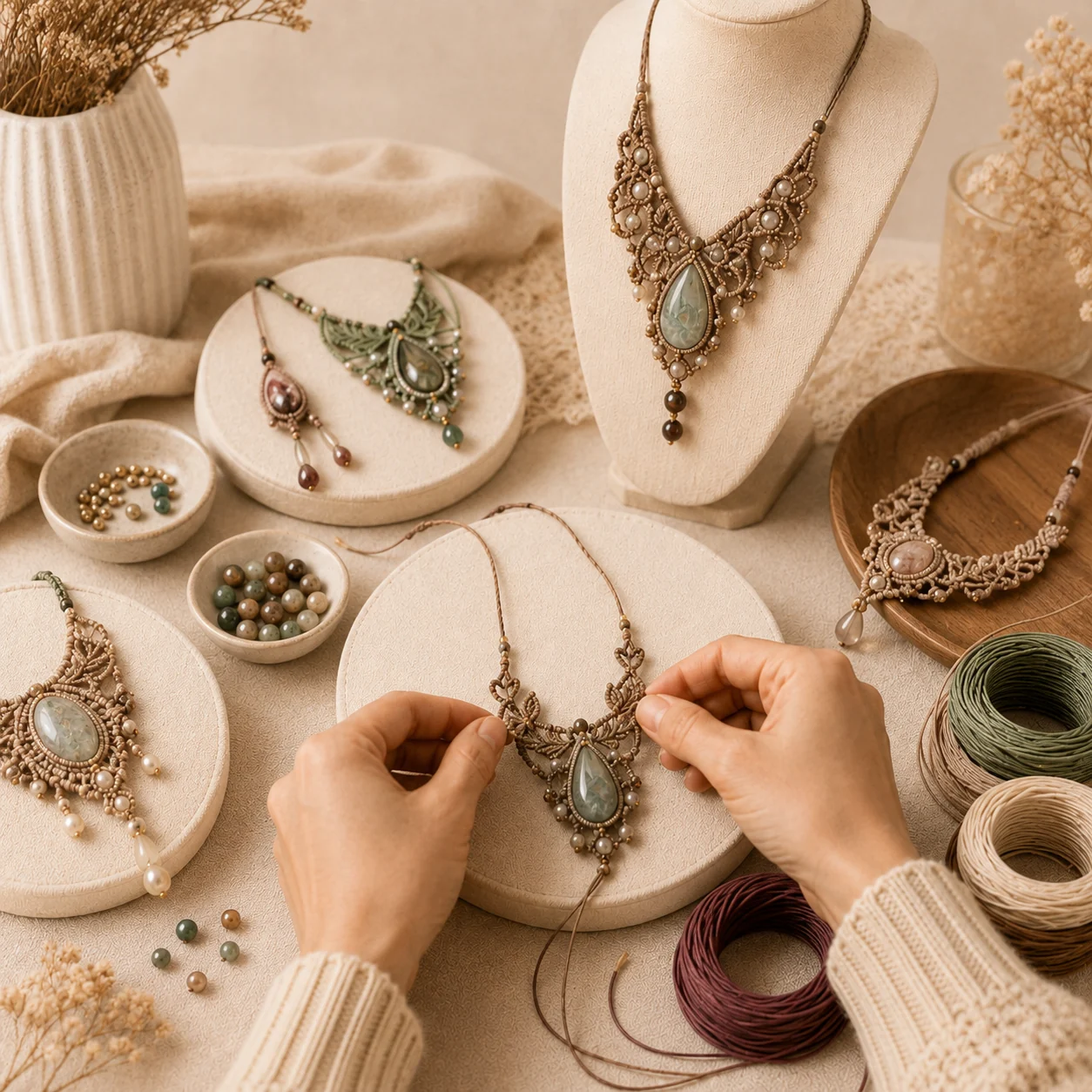
Note the knots, cord type, beads, focal pieces and finishing method before cutting.
Knotting consumes a substantial amount of cord, so use the lengths provided by the pattern rather than
measuring only the final necklace size.
Use pins or tape on a suitable board so the holding cords remain stable as you knot.
Compare the direction and tension of each repeat before moving too far ahead.
Lay the necklace naturally before finishing so pendants, cabochons or bead clusters sit where intended.
Make sure the necklace can be put on, removed and adjusted correctly before permanently securing the ends.
Choose From 200+ Macramé Jewelry Patterns
Find necklace, choker, pendant, bracelet, earring and beaded micro-macramé projects in one collection.
Common Macrame Necklace Problems
The necklace twists unevenly
Check whether the knot sequence is meant to spiral and whether the same working side is being repeated
consistently.
The focal piece sits off-center
Compare the knotting and cord length on both sides before permanently finishing the necklace.
Beads will not slide onto the cord
The bead holes are too small for the chosen cord or multiple strands. Test compatibility before starting.
The sliding closure will not move
Make sure finishing stitches or melted ends have not accidentally caught the internal cords that need to
slide through the closure.
Macrame Necklace FAQ
What cord is best for a macrame necklace?
It depends on the design. Fine waxed or nylon cord is useful for detailed jewelry and beads, while
natural fibers such as cotton, linen or hemp create a softer look.
Which knots are most useful for macrame necklaces?
Square knots, half-knot spirals, double half hitches and lark’s head variations appear repeatedly in
jewelry-scale macramé.
Can beginners make a macrame necklace?
Yes. Start with a simpler square-knot or charm-style necklace before moving into wide chokers, cabochon
framing or detailed micro-macramé.
Can I add gemstone beads to a macrame necklace?
Yes, but check the bead holes carefully. Some semiprecious beads have small or rough holes that may not
suit the chosen cord.
How do adjustable macrame necklace closures work?
A separate cord can be knotted around two overlapping necklace cords so those internal cords remain free
to slide and adjust the finished length.
Related Macramé Guides
Use these guides to build the skills around your next jewelry project.