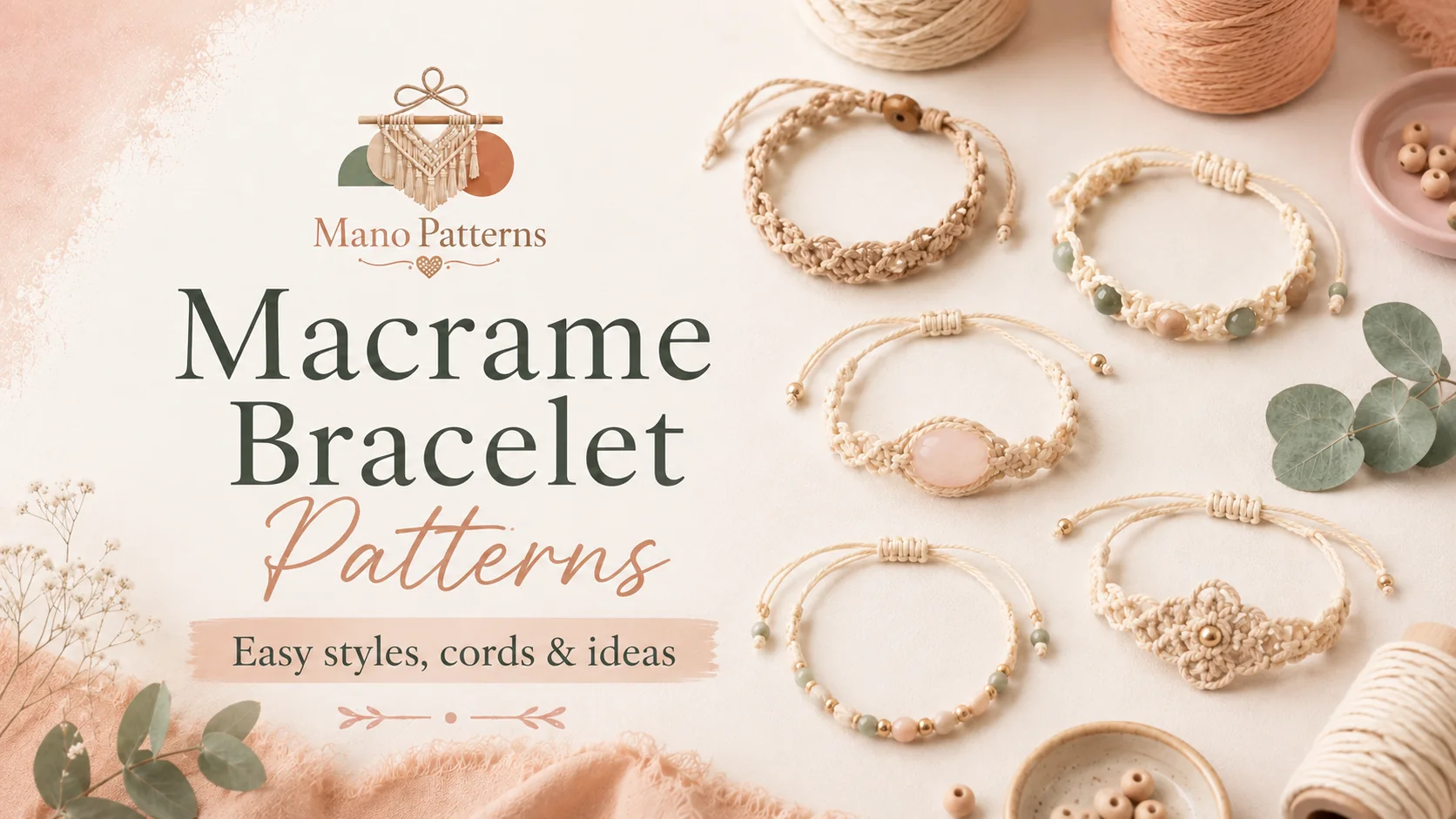
Macrame Bracelet Patterns: Styles, Knots, Cord & Closures
Macrame bracelet patterns are a practical way to move from practicing individual knots
to making a finished piece you can actually wear. A bracelet is small enough for beginners to manage,
but it still teaches important skills such as measuring, keeping tension even, placing beads and choosing
a secure closure.
This guide explains the main bracelet styles, useful knots, cord choices, sizing and finishing options.
It is designed to help you understand what makes one bracelet pattern different from another so you can
choose projects that match your current skill level.
- Choose the closure before deciding the final bracelet length.
- Keep repeated knots the same size so the band stays straight.
- Check that beads fit the actual cord before you start knotting.
- Test the bracelet around the wrist before trimming or sealing the ends.
Common Macrame Bracelet Styles
Bracelet patterns can use the same basic knots and still look completely different depending on width,
cord, beads and the way the piece closes.
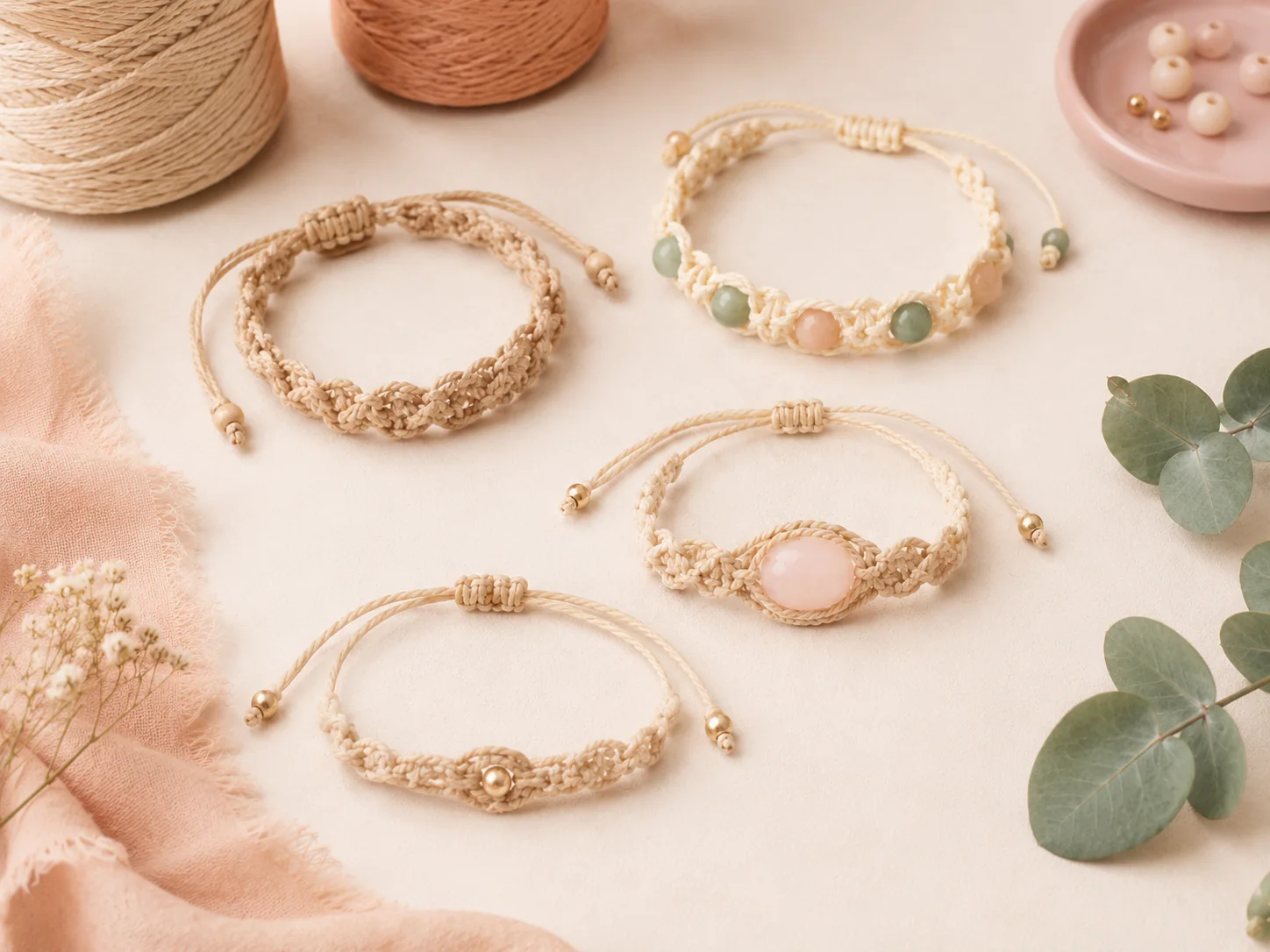
Simple Knotted Bands
Narrow bands built from repeated square knots or half-knot spirals are among the easiest bracelet
structures to understand and customize.
Beaded Bracelets
Beads can be placed between knot sections, threaded onto filler cords or used as the central focal
point of the bracelet.
Gemstone & Focal Bracelets
Larger stones, decorative links or focal beads need balanced knotting on both sides so the centerpiece
stays centered on the wrist.
Micro-Macramé Bracelets
Fine cord allows more detailed motifs and curves, but small knots make uneven tension much easier to see.
Get the Full 200+ Macramé Jewelry Patterns Bundle
Explore a large collection of bracelet, necklace, earring, pendant and beaded jewelry projects.
Start with a simpler bracelet and keep the more detailed designs for later.
Many Bracelet Styles
Beginner to Detailed
Best Knots for Macrame Bracelets
You do not need dozens of knots. A small group of reliable techniques can create many different bracelet
textures and structures.
Square Knot
Useful for flat bracelet bands. Repeating complete square knots produces a balanced, relatively straight
structure when tension stays even.
Half-Knot Spiral
Repeating the same half of a square knot creates a natural twist, making it useful when you want a
spiral bracelet rather than a flat band.
Half Hitch & Double Half Hitch
Hitch-based knots are useful for diagonal lines, curves, borders and more detailed micro-macramé motifs.
Overhand & Finishing Knots
Simple knots are often used near beads, cord ends and closures where you need a compact way to secure
part of the bracelet.
instead of alternating sides to complete full square knots.
Beginner Technique Guide
Macrame for Beginners: 7 Essential Knots to Learn First
Choosing Cord for a Macrame Bracelet
Bracelet cord needs to be comfortable against the skin, strong enough for repeated wear and suitable for
the size of your knots and beads.
Fine synthetic jewelry cord
C-Lon and similar nylon cords are commonly used for detailed micro-macramé jewelry because they allow
small, precise knots and work well with many beads.
Cotton, hemp & other fibers
Softer natural cords can work well for casual bracelets and larger knot structures. The exact diameter
changes how bulky the finished band feels.
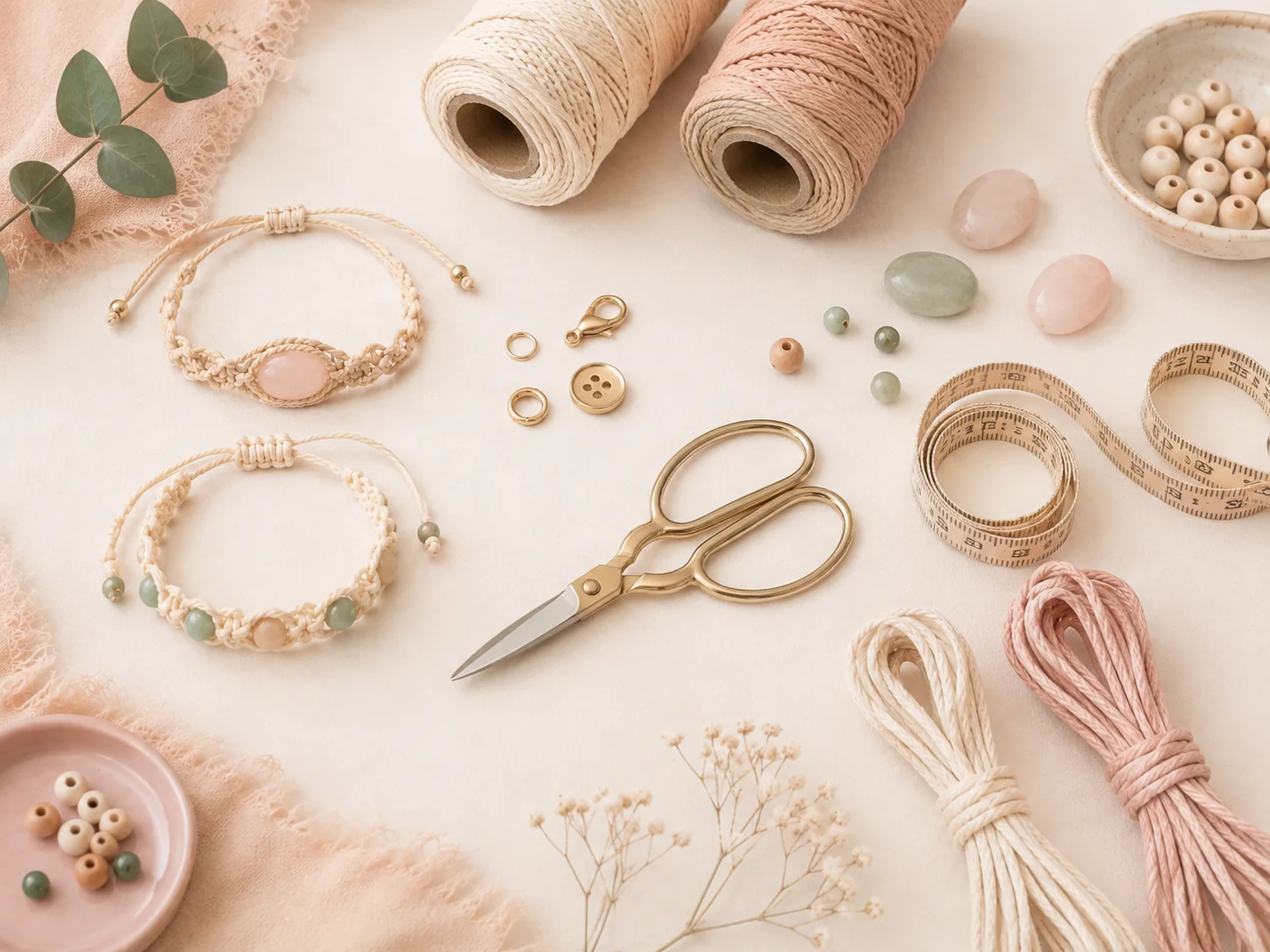
Pass the actual cord through the bead hole before cutting all your strands. A bead that looks large enough
may still have a hole that is too small for doubled or multiple cords.
How to Size a Macrame Bracelet
The wrist measurement is only the starting point. The closure, bead size and thickness of the finished
band all affect how the bracelet actually fits.
Wrap a flexible tape around the place where the bracelet will sit without pulling it too tightly.
Choose whether the finished bracelet should feel fitted, slightly relaxed or fully adjustable.
A button, clasp, toggle or sliding knot adds usable length. Include it before deciding where the knotted
section should end.
Check the bracelet around the wrist before trimming, sealing or permanently securing the final cords.
the knotted band and the chosen closure rather than one standard measurement.
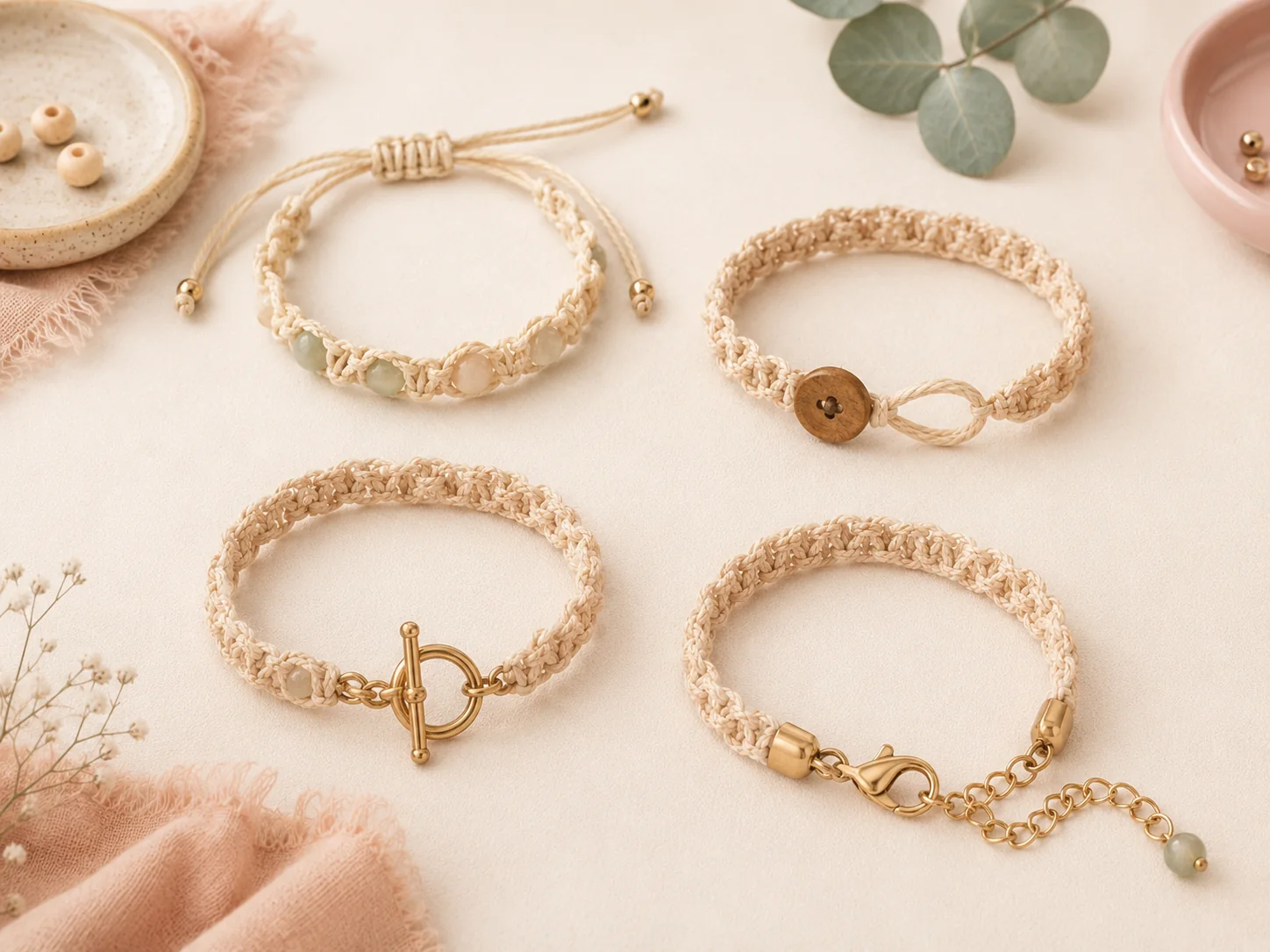
Macrame Bracelet Closure Options
The closure changes both the appearance and the fit of the bracelet, so it is better to choose it before
you reach the final few rows.
Sliding Knot
A popular adjustable option for casual bracelets because the wearer can tighten or loosen the fit.
Button & Loop
Creates a handmade finish and can become part of the design. The loop needs to fit the button closely
enough to stay secure.
Toggle Clasp
Gives the bracelet a more traditional jewelry finish and works especially well with structured,
decorative bands.
Lobster Clasp & Jump Rings
Useful when you want a conventional jewelry closure or an extension chain for adjustable sizing.
Adding Beads Without Distorting the Bracelet
Beads should feel integrated into the knot pattern rather than pulling the band out of shape.
Keep focal beads centered
When a bracelet has one main stone or large bead, compare the knotting on both sides before finishing so
the focal point sits where you intended.
Watch the weight
Heavy beads can make a narrow band rotate around the wrist. A wider or more structured section can give
a heavier focal element more support.
adjust spacing and color order before they are locked into the bracelet.
How to Approach Your First Macrame Bracelet Pattern
A simple workflow makes the project easier to follow and reduces the chance of discovering a sizing or
closure problem at the very end.
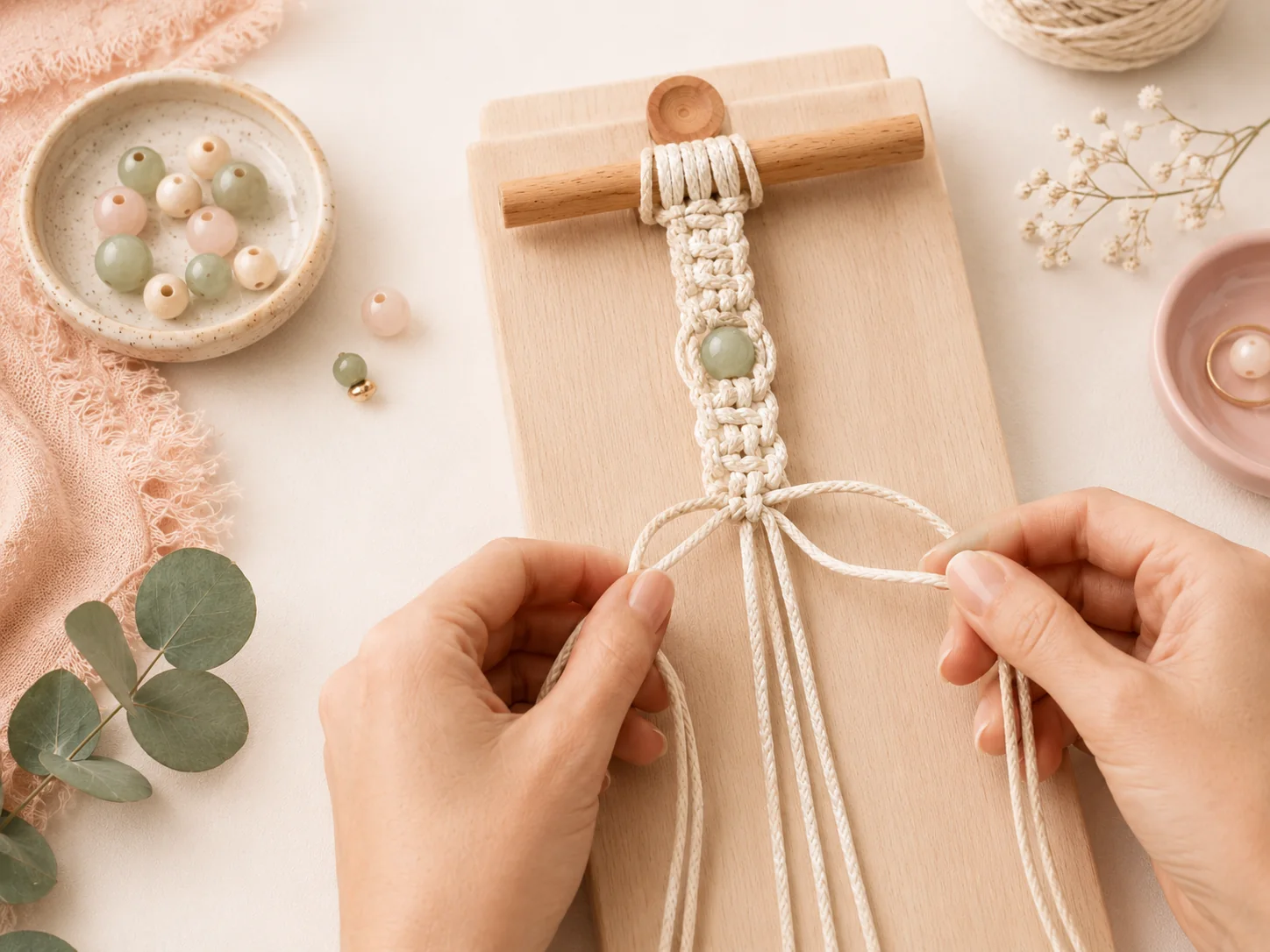
Check the required knots, cord lengths, beads and closure before cutting anything.
Separate filler cords and working cords if the design uses them differently.
Clip or pin the bracelet so the work does not move while you apply tension.
Make sure the knot direction is correct before repeating the same sequence across the band.
Flatten the bracelet every few rows and compare both edges.
Include the closure before deciding that the bracelet is long enough.
Find Beginner-Friendly and Detailed Jewelry Projects in One Collection
The full 200+ collection gives you many bracelet styles to choose from, plus necklaces, earrings,
pendants and beaded designs for when you want to try something different.
Common Macrame Bracelet Problems
The band curves
One side is often being pulled more tightly than the other. Flatten the bracelet and compare both edges
frequently while working.
The knots look uneven
Aim for repeatable tension instead of maximum tightness. Extremely tight knots are not automatically
neater knots.
The bracelet is too long
The closure may not have been included in the measurement. Always test the complete bracelet structure
before finishing the ends.
The beads pull sideways
Check bead placement and the tension immediately around each bead before continuing the next section.
Macrame Bracelet FAQ
Are macrame bracelets good for beginners?
Yes. A simple bracelet is a manageable first project because it uses a relatively small work area while
still teaching knot repetition, sizing and finishing.
What knot is best for a beginner macrame bracelet?
Square knots are a practical starting point because they can form a flat band and are used in many other
macramé projects.
Why is my square-knot bracelet twisting?
You may be repeating the same half-knot. Alternating sides completes full square knots; repeating one
side naturally creates a spiral.
Can I use beads in a beginner bracelet?
Yes. Test the bead holes with the exact cord first and keep the first design simple so you can focus on
even tension and placement.
Which bracelet closure is easiest?
Sliding closures are convenient for adjustable casual bracelets, while button loops and metal clasps
create different looks and sizing requirements.
More Macramé Guides
Build the skills around your bracelet project with these related Mano Patterns guides.